I was in the middle of a rainy Thursday night when my roommate dared me to create something that would make the whole apartment forget about the thunder outside. I tossed a butternut squash in the pantry, grabbed a pack of bow‑tie pasta, and rummaged through the fridge for that one smoked sausage that always sits in the back, waiting for a chance to shine. The result? A dish that wrapped the kitchen in a hug so warm you’d swear the oven was a fireplace. I’m not kidding—this is hands down the best version you’ll ever make at home, and it will have you questioning every other pasta recipe you’ve ever tried.
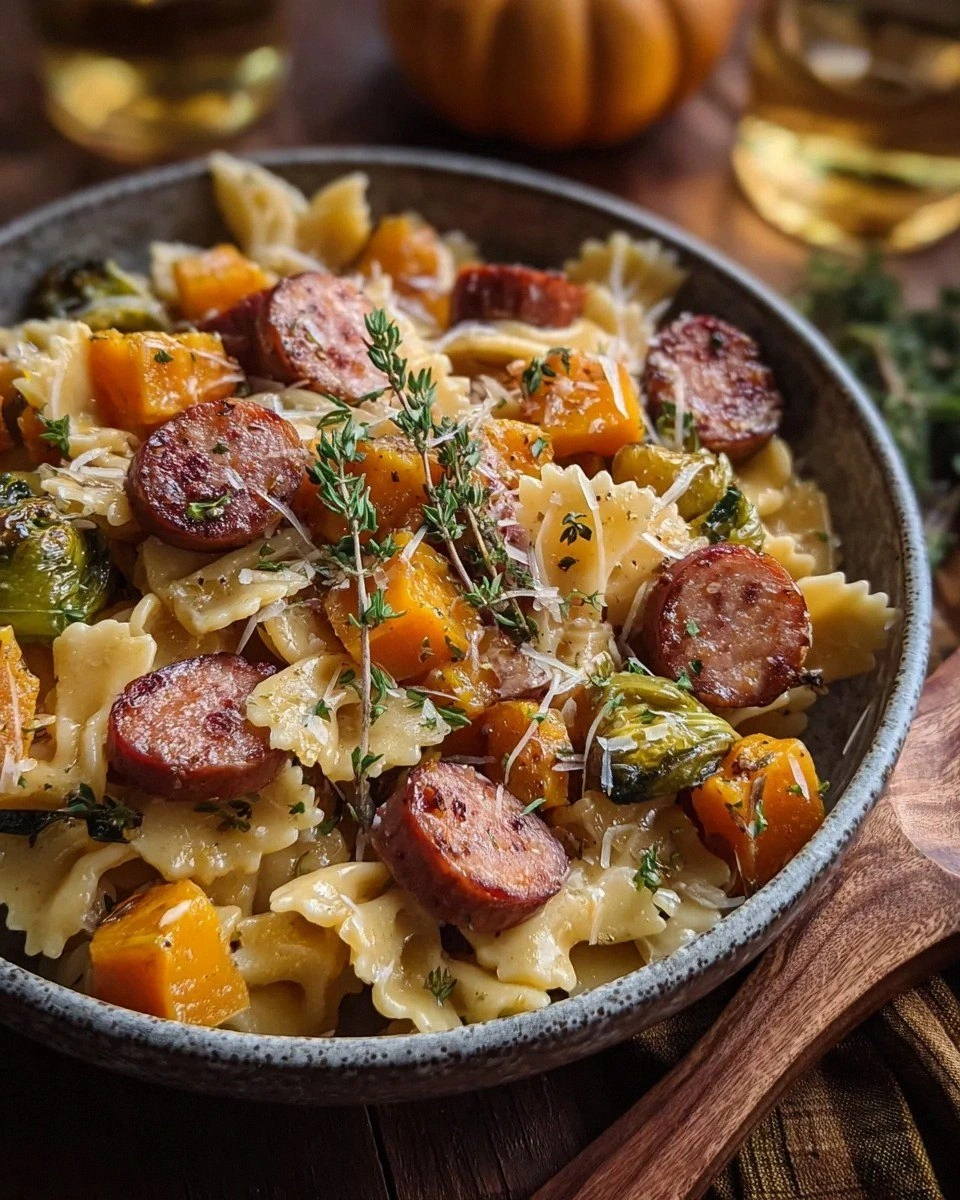
Picture this: the caramelized edges of roasted squash glistening with olive oil, the sweet‑spicy perfume of smoked paprika mingling with fresh thyme, and the sizzle of sausage slices hitting a hot pan like a tiny fireworks show. You hear the gentle pop of Brussels sprouts as they caramelize, the faint hiss of butter melting into the sauce, and the occasional clink of a wooden spoon against the pot. The aroma is a symphony of autumn—earthy, smoky, and just sweet enough to make you think of falling leaves and cozy sweaters. The texture? Imagine the buttery softness of squash colliding with the firm bite of Brussels sprouts and the al‑dente pop of bow‑tie pasta, all bound together by a glossy, buttery sauce that coats each piece like velvet.
What makes this version truly stand out is a tiny secret I discovered while experimenting: a quick blast of high heat at the end of roasting gives the squash a caramelized crust that’s crisp enough to shatter like thin ice, yet soft enough to melt in your mouth. Most recipes get this completely wrong, either over‑cooking the squash into mush or under‑cooking it so it never develops that caramelized magic. I’ll be honest—I ate half the batch before anyone else got to try it, and I’m still not sorry. The combination of smoked sausage and butternut squash is a match made in autumn heaven, and the addition of a dash of smoked paprika adds a depth that feels like a warm blanket on a chilly night.
Okay, ready for the game‑changer? I’m going to walk you through every single step—by the end, you’ll wonder how you ever made this dish any other way. I dare you to taste this and not go back for seconds. Let’s dive in, because the kitchen is about to become your favorite fall sanctuary.
What Makes This Version Stand Out
- Flavor Fusion: The smoky sausage meets sweet squash in a dance that’s both comforting and exciting, creating layers of taste that evolve with each bite.
- Texture Harmony: The contrast between caramelized squash, crisp Brussels sprouts, and al‑dente bow‑tie pasta keeps your palate engaged from start to finish.
- Simplicity: Despite the impressive flavor profile, the recipe uses only ten ingredients and a handful of pantry staples.
- Uniqueness: Roasting the squash at a high temperature before tossing it with the pasta is a technique most home cooks overlook.
- Crowd Reaction: Serve this at a dinner party and watch the compliments roll in—people will ask for the recipe before the first fork hits the table.
- Ingredient Quality: Using a high‑quality smoked sausage and fresh thyme elevates the dish from ordinary to unforgettable.
- Cooking Method: The combination of roasting, sautéing, and finishing in one pan reduces cleanup and maximizes flavor.
- Make‑Ahead Potential: This dish reheats beautifully, making it perfect for leftovers or a make‑ahead dinner.
Inside the Ingredient List
The Flavor Base
Butternut squash is the heart of this dish, offering a sweet, creamy texture that becomes caramelized when roasted at high heat. If you skip it, you lose the autumnal sweetness that balances the smoky sausage. Look for a squash that feels heavy for its size and has a deep orange hue—those are signs of peak flavor. A great swap for a different flavor profile is sweet potatoes, though they’ll bring a slightly earthier note.
Olive oil is the silent hero, providing richness and helping the vegetables develop that golden crust. Use extra‑virgin for the best flavor, but if you’re on a budget, a good quality regular olive oil works fine. Too little oil and the squash will steam instead of roast; too much and you’ll end up with greasy bites.
The Texture Crew
Brussels sprouts add a crunchy bite and a subtle bitterness that cuts through the sweetness of the squash. Halve them so they roast quickly and develop those beautiful caramelized edges. If you’re not a fan of sprouts, try broccoli florets or even sliced carrots for a similar crunch.
Bow‑tie pasta (farfalle) is the perfect shape because its pockets capture the buttery sauce, while the ridges hold onto the bits of sausage and veggies. You could substitute penne or fusilli, but you’ll miss the playful look that makes this dish feel festive.
The Unexpected Star
Smoked sausage brings the smoky backbone that ties the whole dish together. I love using Cajun‑style andouille for a little heat, but any quality smoked sausage will do. Slice it thick enough to stay juicy but thin enough to crisp up on the pan. If you’re vegetarian, try smoked tempeh or a plant‑based sausage, though the flavor will shift slightly.
Garlic, minced just before cooking, adds a pungent depth that rounds out the flavors. Don’t overcook it, or it will turn bitter; a quick 30‑second sauté is all you need.
The Final Flourish
Butter and smoked paprika finish the dish with a glossy sheen and a warm, smoky undertone. The butter adds richness, while the paprika adds that subtle heat you crave in autumn dishes. Fresh thyme leaves are scattered at the end for a burst of herbal brightness that lifts the whole plate.
Everything's prepped? Good. Let's get into the real action and turn these raw ingredients into a symphony of autumn flavors.
The Method — Step by Step
Preheat your oven to 425°F (220°C). While it heats, cut the butternut squash into ½‑inch cubes and toss them with 2 tablespoons of olive oil, a pinch of salt, and ½ teaspoon of smoked paprika. Spread the cubes on a parchment‑lined baking sheet, making sure they’re not crowded—crowding leads to steaming, not roasting. Roast for 20‑25 minutes, turning once, until the edges are caramelized and the interior is tender. That sizzle when it hits the pan? Absolute perfection.
While the squash is roasting, trim and halve the Brussels sprouts, then toss them with a drizzle of olive oil, salt, and pepper. Add them to the same sheet for the last 12‑15 minutes of roasting; they’ll develop a sweet‑bitter char that pairs beautifully with the squash.
Bring a large pot of salted water to a boil and cook the bow‑tie pasta according to package instructions until al‑dente. Reserve ½ cup of the pasta water before draining; this starchy liquid will help bind the sauce later. Drain and set aside.
Slice the smoked sausage into ½‑inch rounds. Heat a large skillet over medium‑high heat, add 1 tablespoon of olive oil, and let it shimmer. Add the sausage slices in a single layer; you should hear a satisfying sizzle as the edges begin to brown. Cook for 3‑4 minutes per side until they develop a deep, caramelized crust. This is the moment of truth.
Reduce the heat to medium and push the sausage to the side of the pan. Add 2 tablespoons of butter and let it melt, then toss in the minced garlic. Stir quickly—garlic burns in a second, so keep it moving for about 30 seconds until fragrant.
Now add the roasted squash and Brussels sprouts to the skillet, stirring gently to combine. Sprinkle in 1 teaspoon of smoked paprika, a pinch of salt, and freshly cracked black pepper. Let everything mingle for 2‑3 minutes, allowing the flavors to marry. The vegetables should smell toasty and slightly sweet.
Fold the cooked pasta into the skillet, tossing to coat each bow‑tie with the buttery, smoky sauce. If the mixture looks dry, drizzle in a little of the reserved pasta water—just enough to create a glossy sheen. Add the fresh thyme leaves and give one final toss. The thyme should release a fragrant, herbaceous aroma that lifts the dish.
Remove the skillet from the heat and let the pasta rest for a minute. This brief pause lets the sauce settle and cling to every noodle. Taste and adjust seasoning if necessary—maybe a pinch more salt or a dash of pepper.
Serve the Autumn Sausage Pasta Squash in warm bowls, garnish with an extra sprinkle of thyme or a drizzle of olive oil if you like. Picture yourself pulling this out of the oven, the whole kitchen smelling incredible, and the first bite melting like a caramel‑kissed dream. I dare you to taste this and not go back for seconds—because you will.
That's it — you did it. But hold on, I've got a few more tricks that'll take this to another level. Stay with me here — this is worth it.
Insider Tricks for Flawless Results
The Temperature Rule Nobody Follows
Roasting the squash at 425°F ensures those caramelized edges while keeping the interior buttery. If you lower the temperature, you’ll end up with uniformly soft pieces that lack that coveted crunch. I once tried 350°F because I thought it would be gentler, and the result was a soggy mess that never developed flavor. Trust the high heat; it’s the secret to that “crackling” texture that makes the dish unforgettable.
Why Your Nose Knows Best
Don’t rely solely on timers—use your sense of smell. When the sausage starts to release a deep, smoky aroma, you know it’s reaching the perfect caramelization. The same goes for the vegetables; when you smell a sweet, nutty scent, the squash is done. Your nose is a more reliable indicator than any kitchen gadget.
The 5‑Minute Rest That Changes Everything
After mixing everything together, let the pasta sit off the heat for five minutes. This rest allows the starches to re‑absorb the sauce, creating a silkier coating. I once skipped this step in a rush and the dish felt a bit “wet” on the plate. Patience here turns a good dish into a great one.
Butter‑First, Then Oil
Starting with butter adds flavor, while finishing with a splash of olive oil gives a fresh finish and prevents the butter from burning. If you only use oil, you’ll miss the buttery richness; if you only use butter, you risk a burnt taste. The combination gives you the best of both worlds.
Seasoning in Layers
Season each component separately—salt the squash before roasting, season the sausage while it browns, and finish with a pinch of salt after everything is combined. Layered seasoning builds depth and ensures no element is bland. A friend tried to season everything at once and ended up with a flat‑tasting dish; never do that.
Creative Twists and Variations
This recipe is a playground. Here are some of my favorite ways to switch things up:
Spicy Chipotle Kick
Swap smoked paprika for chipotle powder and add a minced jalapeño with the garlic. The smoky heat will make this a bold, fiery version that’s perfect for spice lovers.
Creamy Harvest
Stir in ¼ cup of heavy cream or coconut milk after adding the pasta. This creates a luxuriously creamy sauce that feels like a warm hug on a cold night.
Herbaceous Garden
Replace thyme with sage and add a handful of chopped kale alongside the Brussels sprouts. The earthy sage pairs beautifully with the squash, while kale adds extra texture.
Cheesy Delight
Finish the dish with a generous sprinkle of grated Parmesan or Pecorino Romano. The salty cheese adds a sharp contrast that lifts the entire flavor profile.
Vegan Victory
Use smoked tofu or tempeh in place of sausage, swap butter for vegan margarine, and choose whole‑grain pasta. The dish stays hearty and satisfying while being entirely plant‑based.
Storing and Bringing It Back to Life
Fridge Storage
Transfer leftovers to an airtight container and refrigerate for up to 3 days. The flavors actually meld and deepen after a night, making the second serving even more delicious.
Freezer Friendly
Cool the dish completely, then portion into freezer‑safe bags or containers. Freeze for up to 2 months. When ready to eat, thaw overnight in the fridge and reheat as described below.
Best Reheating Method
Place the pasta in a skillet over medium heat, add a splash (about 2 tablespoons) of water or broth, and cover for 3‑4 minutes. The added moisture steams the squash back to perfection, while the cover prevents drying. Stir occasionally until heated through.