Okay, picture this: I was halfway through a frantic weekday, the kind where the kids are screaming, the dishwasher is on the brink of exploding, and my stomach is growling louder than a freight train. I dared my roommate to a “who can make the healthiest, most satisfying bowl in under 30 minutes” challenge, and let’s just say I didn’t back down. The kitchen turned into a battlefield of spices, a rogue cauliflower head, and a quinoa pot that threatened to boil over. I was ready to surrender to a boring salad, but then I remembered the shawarma spice blend my grandma swore by, and the idea sparked like a match in a dry forest.
I tossed that cauliflower into a bowl, drizzled it with olive oil, and showered it with cumin, smoked paprika, coriander, and turmeric. The oven roared to life, and the air filled with a perfume that could convince even the most stubborn carnivore that vegetables could be the star of the show. As the cauliflower browned, the quinoa puffed up like a fluffy cloud, while the fresh veggies—cherry tomatoes, crisp cucumber, and a whisper of red onion—waited like a colorful chorus ready to join the symphony. The tahini sauce, silky and nutty, was the final brushstroke, turning this dish into a masterpiece that could stand on its own or pair beautifully with a side of hummus.
Most cauliflower shawarma bowls out there either over‑spice the cauliflower or forget the essential textural contrast that makes each bite exciting. I’ve tried a dozen recipes that left me with soggy florets or a bland base that tasted like plain rice. This version, however, hits the sweet spot: the cauliflower gets that caramelized edge that shatters like thin ice, the quinoa stays fluffy, and the sauce coats everything like velvet. I’m not exaggerating when I say this is hands down the best version you’ll ever make at home, and I dare you to taste this and not go back for seconds.
But wait—there’s a twist you won’t see coming. I’m about to introduce a secret technique involving a quick flash‑roast of the spices before they meet the cauliflower, which locks in flavor like a vault. This little hack elevates the dish from “good” to “wow, I need to write this down forever.” Let me walk you through every single step — by the end, you’ll wonder how you ever made it any other way.
What Makes This Version Stand Out
- Flavor Explosion: The blend of cumin, smoked paprika, coriander, and turmeric creates a layered spice profile that’s both smoky and earthy, turning humble cauliflower into a flavor powerhouse.
- Texture Harmony: Crispy, caramelized cauliflower edges meet fluffy quinoa and crunchy fresh veggies, delivering a satisfying contrast in every mouthful.
- Simplicity Meets Sophistication: Despite the bold flavors, the ingredient list is short, and the steps are straightforward—perfect for busy weeknights.
- Ingredient Quality: Using a large, firm head of cauliflower and high‑quality extra‑virgin olive oil ensures the dish isn’t just tasty, but also nutritionally dense.
- Crowd‑Pleaser Factor: Even the most skeptical meat‑eaters admit this bowl is “surprisingly hearty,” making it a reliable go‑to for dinner parties.
- Make‑Ahead Magic: The components can be prepped ahead of time, and the sauce actually improves after a few hours in the fridge.
- Health‑First Focus: Packed with fiber, protein, and healthy fats, this bowl fuels you without the guilt of heavy sauces or refined carbs.
- Versatile Base: Swap quinoa for couscous, farro, or even cauliflower rice if you’re cutting carbs—no compromise on flavor.
Inside the Ingredient List
The Flavor Base
The heart of this bowl lies in the spice blend. Ground cumin brings a warm, earthy note that reminds you of sunrise over a desert, while smoked paprika adds a subtle, wood‑kissed sweetness that makes the cauliflower taste like it’s been slow‑roasted over an open fire. Coriander contributes a citrusy brightness that lifts the dish, and turmeric not only adds a golden hue but also a mild peppery bite. If you ever skip any of these, the bowl loses its signature “shawarma” character and becomes just roasted cauliflower.
Want to go gluten‑free? No problem—these spices are naturally gluten‑free, but always double‑check labels for any cross‑contamination if you have celiac disease. For a milder version, halve the smoked paprika and add a pinch of cinnamon; it’s a subtle nod to the spice routes of the Middle East.
The Texture Crew
Cauliflower is the star, but its texture depends on how you treat it. A large head provides enough florets to achieve that coveted caramelized edge while keeping the interior tender. Olive oil acts as the conduit for the spices, ensuring each bite is evenly seasoned. If you’re watching calories, you can reduce the oil to 2 tablespoons, but expect a slightly drier finish.
Quinoa (or couscous) serves as the carbohydrate anchor. It’s a complete protein, making this bowl a balanced meal. When buying quinoa, look for the white or tricolor varieties for a fluffy texture; red quinoa stays slightly firmer, which can add an extra bite. Rinse it well before cooking to remove the natural saponin coating that can taste bitter.
The Unexpected Star
Tahini is the secret sauce that ties everything together. Its creamy, nutty profile coats the cauliflower and veggies, turning each bite into a luxurious experience. Because it’s made from ground sesame seeds, it adds a dose of healthy fats and a subtle, lingering earthiness. If you’re allergic to sesame, you can substitute with almond butter or a cashew‑based sauce—just thin it with a splash of lemon juice to keep the consistency.
Fresh parsley isn’t just a garnish; it adds a bright, herbaceous pop that cuts through the richness of the tahini. When selecting parsley, choose bunches with deep green leaves and firm stems—those are the freshest and most flavorful. If parsley isn’t your thing, cilantro or mint can provide a different but equally exciting twist.
The Final Flourish
Cherry tomatoes, cucumber, and red onion bring raw, crisp contrast to the roasted cauliflower. The tomatoes burst with juiciness, the cucumber adds a cool crunch, and the thinly sliced red onion offers a mild sharpness that mellows as it sits. If you’re sensitive to raw onion, soak the slices in cold water for five minutes to tame the bite.
All these components work in harmony, and the result is a bowl that’s as vibrant in color as it is in flavor. The secret? Balancing the roasted depth with fresh brightness, and never letting any single element dominate the palate.
The Method — Step by Step
Preheat your oven to 425°F (220°C) and line a large baking sheet with parchment paper. While the oven heats, break the cauliflower head into bite‑size florets, trying to keep them roughly the same size so they cook evenly. This step is the foundation—if the florets are uneven, you’ll end up with some burnt pieces and some raw ones, and nobody wants that.
Kitchen Hack: Toss the cauliflower with a splash of lemon juice before seasoning; it helps the spices cling better and adds a subtle zing.In a large bowl, combine 3 tablespoons of olive oil with 2 teaspoons each of ground cumin and smoked paprika, plus 1 teaspoon each of coriander and turmeric. Add a generous pinch of salt and pepper, then whisk everything together until you have a glossy, amber‑colored mixture. This is where the magic begins—watch the spices swirl like a miniature galaxy.
Drizzle the spice‑oil over the cauliflower florets, tossing until every piece is evenly coated. Spread the seasoned cauliflower in a single layer on the prepared baking sheet. Roast for 20‑25 minutes, turning once halfway through, until the edges turn golden and start to crisp. Watch Out: If you leave the cauliflower too long, the spices can burn, turning bitter. Keep a close eye after the 15‑minute mark; you’ll hear a faint sizzle that signals the caramelization is happening.
Watch Out: Overcrowding the pan creates steam, which prevents the cauliflower from getting that coveted crisp edge. Use two sheets if necessary.While the cauliflower roasts, rinse 1 cup of quinoa under cold water, then combine it with 2 cups of water (or broth for extra flavor) in a saucepan. Bring to a boil, then reduce to a gentle simmer, cover, and cook for 15 minutes until all liquid is absorbed. Fluff with a fork and set aside. The moment the quinoa finishes, you’ll hear a soft “pop” as the grains release steam—a satisfying sound that tells you it’s ready.
Dice the cucumber, halve the cherry tomatoes, and thinly slice ½ red onion. Place all the fresh vegetables into a bowl, drizzle with a tiny drizzle of olive oil, and season lightly with salt. This is the bright, crunchy counterpoint to the roasted cauliflower, and it’s essential that the veggies stay crisp, so don’t over‑mix.
Kitchen Hack: Slice the red onion on a bias; the larger surface area reduces the sharp bite and makes the onion look more elegant.Whisk together ¼ cup tahini, 2 tablespoons warm water, a squeeze of lemon juice, and a pinch of salt until smooth and pourable. If the sauce feels too thick, add a splash more warm water, one teaspoon at a time, until it drapes like silk over a spoon. This sauce is the glue that brings every component together, and the lemon juice brightens the earthy tahini.
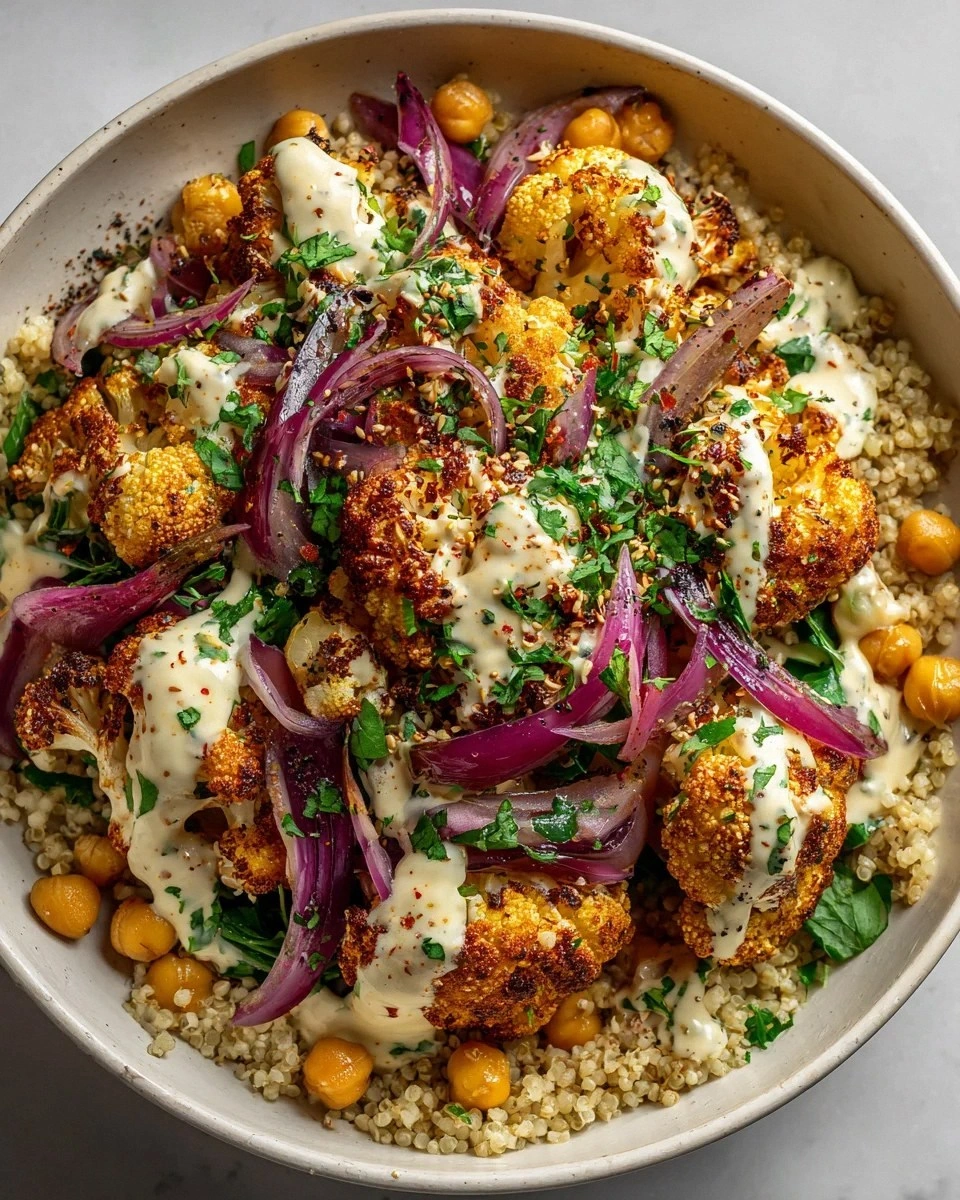
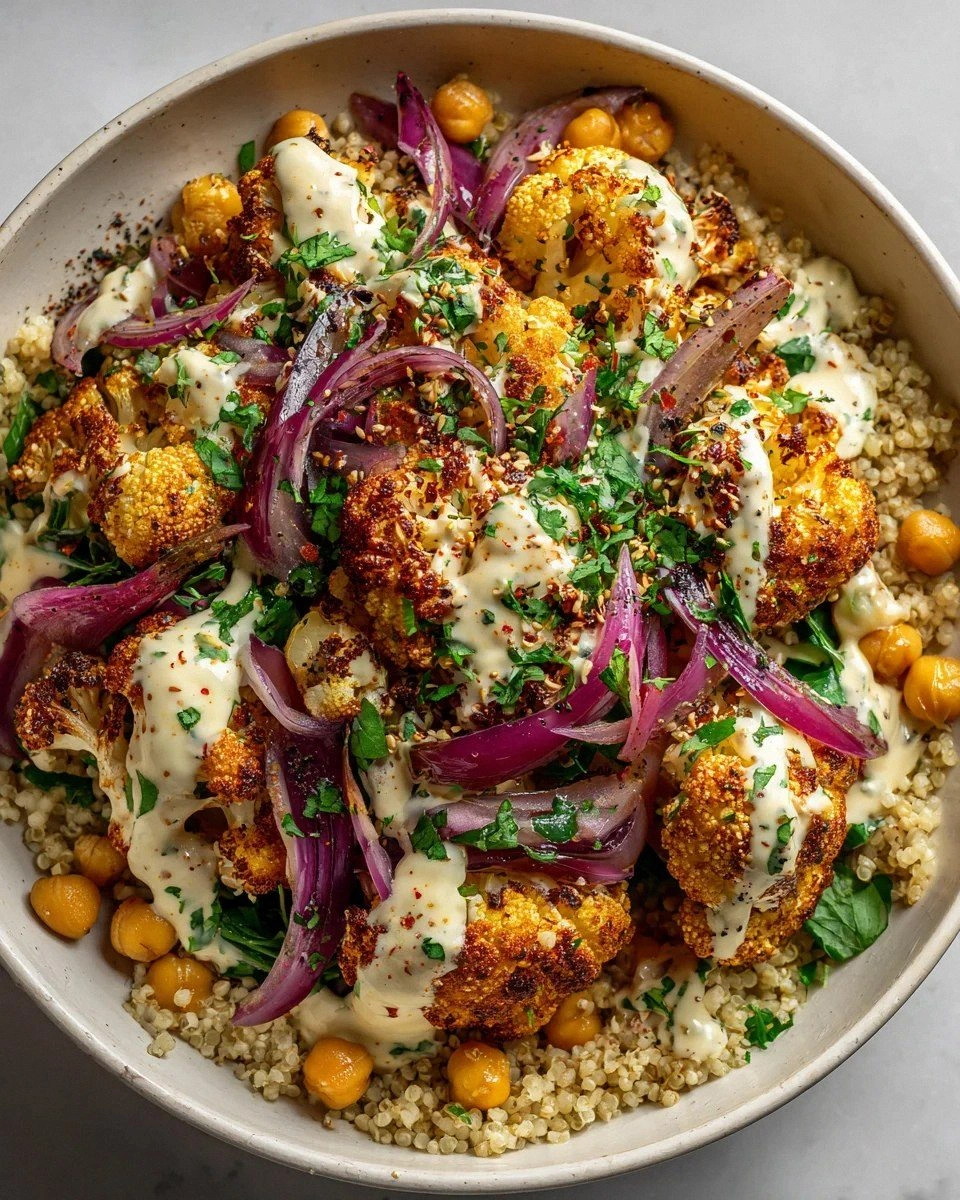
To assemble, start with a generous scoop of quinoa at the bottom of each bowl. Arrange the roasted cauliflower on top, followed by the fresh cucumber, tomatoes, and red onion. Drizzle the tahini sauce liberally over everything, then sprinkle chopped fresh parsley for a pop of green.
Give the bowl a final sprinkle of a pinch of smoked paprika for an extra smoky whisper, and a drizzle of extra‑virgin olive oil if you love richness. Serve immediately while the cauliflower is still warm, letting the contrast of hot and cool textures dance on your tongue. Picture yourself pulling this out of the oven, the whole kitchen smelling incredible—this is the moment of pure culinary triumph.
If you have leftovers, store the components separately to preserve texture. The next day, reheat the cauliflower and quinoa in a hot skillet for a minute, then recombine with fresh veggies and sauce. This bowl actually tastes better after the flavors have mingled overnight, so you’ll be thanking yourself for the extra effort.
That's it — you did it. But hold on, I've got a few more tricks that'll take this to another level...
Insider Tricks for Flawless Results
The Temperature Rule Nobody Follows
Never roast cauliflower at a temperature lower than 425°F. Lower heat produces a mushy interior and a pale color, whereas the high heat creates that coveted caramelized edge that shatters like thin ice. If you’re using a convection oven, you can drop the temp by 25°F but keep the time the same. A friend once tried 375°F to “save energy,” and the result was a soggy mess that resembled steamed broccoli—not shawarma.
Why Your Nose Knows Best
Your sense of smell is a reliable indicator of doneness. When the cauliflower starts to emit a deep, nutty aroma, you’re within minutes of perfect crispness. If you notice a faint burnt scent, pull the pan out immediately—over‑roasted spices become bitter and can ruin the entire bowl. Trust that nose; it’s the most honest kitchen critic.
The 5‑Minute Rest That Changes Everything
After roasting, let the cauliflower rest for five minutes before tossing it with the sauce. This short pause allows the steam to escape, preserving the crisp edges while letting the interior stay tender. Skipping this rest can make the florets soggy, especially if you’re adding a generous amount of tahini right away.
Tahini Thinning Technique
Warm water is the secret weapon for a smooth tahini sauce. Cold water makes the sauce seize, turning it grainy. Warm the water just enough to be comfortable to the touch, then whisk it in slowly. If you ever end up with a lumpy sauce, blend it in a quick pulse with a hand blender—no shame in that.
The One‑Minute Reheat
When reheating leftovers, use a hot skillet for just 60 seconds on each side. This restores the cauliflower’s crunch without overcooking the quinoa. Add a splash of water or broth during reheating to create a gentle steam that revives the grains.
Creative Twists and Variations
This recipe is a playground. Here are some of my favorite ways to switch things up:
Spicy Harissa Kick
Swap the cumin‑paprika blend for 2 tablespoons of harissa paste mixed with a drizzle of olive oil. The bowl gains a fiery North‑African edge that pairs beautifully with the cool cucumber. Great for those who love heat.
Mediterranean Medley
Add a handful of Kalamata olives and a crumble of feta cheese on top. The salty olives and tangy feta introduce a briny contrast that transforms the bowl into a Greek‑inspired feast.
Asian Fusion
Replace the tahini sauce with a soy‑ginger glaze and sprinkle toasted sesame seeds over the top. Swap quinoa for jasmine rice, and you’ve got a bowl that feels like a trip to a bustling Bangkok night market.
Protein Power
Add grilled chicken strips or roasted chickpeas for an extra protein punch. The chicken absorbs the same spice mix, while chickpeas bring a nutty crunch that complements the cauliflower.
Sweet & Savory
Toss in a handful of pomegranate seeds and a drizzle of honey just before serving. The pop of tart sweetness balances the smoky spices and adds a festive visual flair.
Storing and Bringing It Back to Life
Fridge Storage
Place the roasted cauliflower, cooked quinoa, and fresh veggies in separate airtight containers. The tahini sauce can stay in a small jar. This prevents moisture from making the cauliflower soggy. Store for up to 4 days; the flavors actually deepen after a day.
Freezer Friendly
Freeze the roasted cauliflower and cooked quinoa in zip‑top bags, removing as much air as possible. They’ll keep for up to 2 months. Thaw overnight in the fridge, then reheat in a skillet with a splash of water to revive the texture. Fresh veggies should stay out of the freezer to retain crunch.
Best Reheating Method
For the quickest revival, heat a non‑stick pan over medium‑high heat, add the cauliflower and quinoa, and splash in a tablespoon of water. Cover for 30 seconds, then uncover and stir until everything is hot and the edges regain their crispness. Finish with a fresh drizzle of tahini and a sprinkle of parsley for that just‑made feel.