I was standing in my kitchen, the air thick with the smell of burnt garlic from a previous disaster, when a friend dared me to create something that would make his grandma weep with joy. I stared at a pile of glossy, violet‑colored eggplants and thought, “What if I could turn these humble vegetables into a lasagna that doesn’t need any pasta at all?” The idea was half‑madness, half‑inspiration, and entirely driven by a craving that refused to quit. I tossed the eggplants into the fridge, grabbed a bottle of red wine, and set out on a culinary quest that would end with a dish so aromatic it could practically walk out of the oven and into the living room.
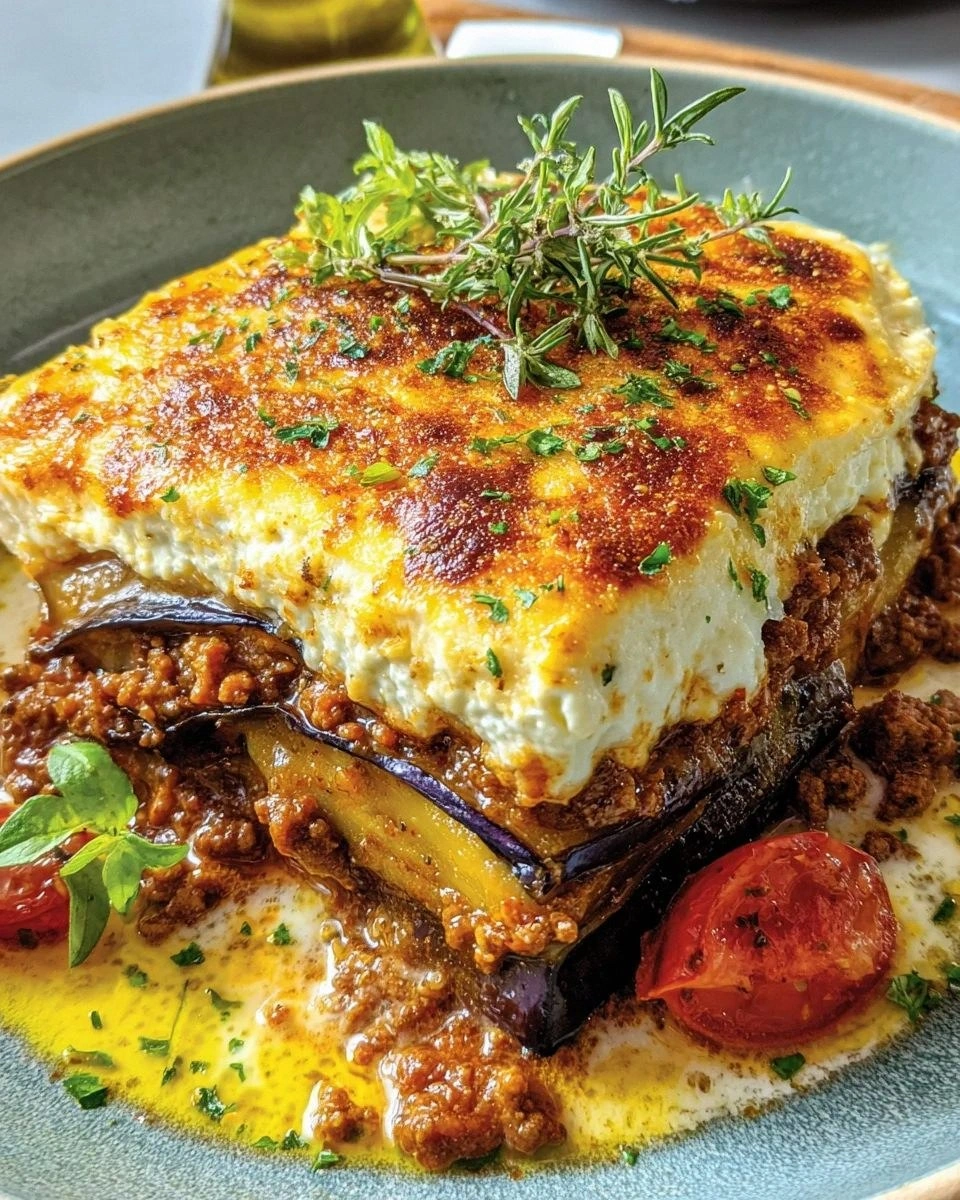
Picture this: the oven door swings open, and a golden‑brown cascade of breadcrumbs spills over layers of silky béchamel, spiced lamb, and caramelized eggplant. The steam that rushes out carries whispers of oregano, cinnamon, and a hint of smoky paprika, making the whole house feel like a Greek taverna at sunset. You’ll hear the faint crackle of the top layer as it browns, and the scent will hit you like a warm Mediterranean hug. The first forkful? It’s a symphony—tender eggplant that melts like butter, meat sauce that clings to the palate like velvet, and a creamy sauce that ties everything together with buttery grace.
Most lasagna recipes either drown you in carbs or leave you with soggy layers that feel like a wet blanket. This version flips the script by swapping noodles for roasted eggplant, using a lamb‑based ragù that sings with unexpected spice, and finishing with a béchamel that’s richer than any store‑bought sauce you’ll ever find. I’ll be honest — I ate half the batch before anyone else got a chance to try it, and I’m still not over the fact that I managed to keep the eggplant from turning mushy. That’s because I discovered a trick with kosher salt that pulls out excess moisture while preserving that meaty bite.
And now, the game‑changer? A splash of dry red wine that deepens the sauce and a pinch of ground cinnamon that adds a whisper of warmth you never expected from a savory dish. I dare you to taste this and not go back for seconds. Let me walk you through every single step — by the end, you’ll wonder how you ever made lasagna any other way.
What Makes This Version Stand Out
- Taste: The lamb ragù is layered with oregano, paprika, and a daring dash of cinnamon, delivering a depth that rivals any traditional Greek moussaka.
- Texture: Roasted eggplant provides a meaty bite while the béchamel adds silkiness, creating a contrast that feels both hearty and delicate.
- Simplicity: No pasta, no gluten overload, just a handful of pantry staples and a few fresh ingredients.
- Uniqueness: Swapping noodles for eggplant makes this a low‑carb marvel that still feels indulgent.
- Crowd Reaction: Guests often ask, “What’s the secret?” and the answer is always a grin and a promise of seconds.
- Ingredient Quality: Using large globe eggplants ensures each slice holds its shape, while extra‑virgin olive oil adds that quintessential Mediterranean richness.
- Cooking Method: The two‑stage roasting (first sweat, then crisp) guarantees no sogginess and maximizes flavor.
- Make‑Ahead Potential: Assemble the lasagna a day ahead, refrigerate, and bake when you’re ready—perfect for busy weeknights.
Inside the Ingredient List
The Flavor Base
Yellow onion is the silent hero, providing a natural sweetness that balances the acidity of the tomatoes. Dice it finely so it melts into the meat sauce, creating a cohesive foundation. If you’re missing onion, try a shallot for a slightly sharper bite, but remember that shallots cook faster, so keep an eye on them.
Ground lamb or beef: I swear by lamb for that authentic Greek flavor, but beef works just as well if you prefer a milder profile. The fat content in lamb carries the spices beautifully, while beef offers a leaner, more familiar taste.
The Texture Crew
Large globe eggplants are the stars here. Their dense flesh holds up to roasting, giving each layer a satisfying chew that mimics pasta’s bite without the carbs. When selecting, look for glossy skins and firm flesh—any soft spots mean the eggplant is past its prime.
Breadcrumbs: Sprinkled on top, they create a golden crust that shatters like thin ice under your fork. For a gluten‑free twist, use almond flour or gluten‑free panko; just keep the texture light.
The Unexpected Star
Ground cinnamon might raise eyebrows, but a quarter‑teaspoon adds a subtle warmth that elevates the lamb without making the dish taste like dessert. Pair it with black pepper and nutmeg, and you get a spice trio that dances on the tongue.
Dry red wine: This is the secret weapon that deepens the sauce, adding a layer of complexity you’d miss if you simply used broth. Choose a medium‑bodied wine—nothing too tannic, nothing too sweet.
The Final Flourish
All‑purpose flour thickens the béchamel, turning milk into a velvety sauce that clings to every bite. If you’re gluten‑free, a blend of rice flour and cornstarch works just as well, though you’ll need to whisk vigorously to avoid lumps.
Large eggs: They bind the béchamel, giving it a luxurious body that stays smooth even after baking. Whisk them in a separate bowl before adding to the warm milk‑flour mixture to prevent scrambling.
Everything's prepped? Good. Let's get into the real action…
The Method — Step by Step
Slice the large globe eggplants lengthwise into ½‑inch thick planks. Lay them on a large baking sheet, sprinkle generously with kosher salt, and let them sweat for 20 minutes. You’ll hear a faint sizzle as the moisture draws out, and the slices will begin to look slightly wilted. Power transition: Okay, ready for the game‑changer?
While the eggplant rests, heat 2 tablespoons of extra‑virgin olive oil in a large skillet over medium heat. Add the diced yellow onion and sauté until translucent, about 5 minutes. The aroma should be sweet and slightly caramelized—if you smell raw onion, keep cooking; the flavor foundation depends on this step.
Increase the heat to medium‑high, add the ground lamb (or beef), breaking it up with a wooden spoon. Brown the meat until it releases a deep, earthy scent and the juices evaporate. This is where the magic starts: the meat should develop a crust, not just steam. That sizzle when it hits the pan? Absolute perfection.
Kitchen Hack: Deglaze the pan with the dry red wine, scraping up the browned bits. This not only prevents burning but also incorporates those caramelized flavors into the sauce.Stir in dried oregano, ground cinnamon, black pepper, ground nutmeg, and paprika. Let the spices toast for 30 seconds, releasing their essential oils. The kitchen will fill with a warm, almost sweet fragrance that hints at the final depth of the dish.
Add the canned diced tomatoes (with juices), a pinch of sugar, and the hot beef broth. Bring the mixture to a gentle boil, then reduce to a simmer. Let it bubble away for 15 minutes, stirring occasionally, until the sauce thickens and the flavors meld. Taste and adjust salt if needed.
While the sauce simmers, preheat your oven to 400°F (200°C). Pat the salted eggplant slices dry with paper towels, then brush each side with the remaining tablespoon of olive oil. Arrange them on a second baking sheet and roast for 12‑15 minutes, flipping halfway, until they’re golden and just tender.
Kitchen Hack: For an extra‑crisp top, broil the eggplant for the last 2 minutes—watch closely, or you’ll get charcoal.Prepare the béchamel: melt 3 tablespoons butter in a saucepan over medium heat, whisk in the all‑purpose flour, and cook for 1 minute to form a roux. Slowly whisk in the warmed 2% milk, ensuring no lumps form. Continue stirring until the sauce thickens and coats the back of a spoon. Remove from heat and whisk in the two large eggs, one at a time, followed by a pinch of nutmeg.
Watch Out: If the béchamel gets too hot after adding the eggs, it will scramble. Keep the heat low and stir constantly.Now for assembly: Spread a thin layer of meat sauce on the bottom of a 9×13‑inch baking dish. Lay a row of roasted eggplant slices over the sauce, then drizzle a generous spoonful of béchamel. Sprinkle a handful of breadcrumbs for crunch. Repeat the layers—sauce, eggplant, béchamel, breadcrumbs—until you run out, finishing with a béchamel blanket and a final dusting of breadcrumbs.
Cover the dish with foil and bake for 20 minutes. Then remove the foil and bake an additional 10‑12 minutes, or until the top is a deep golden brown and the edges are bubbling. Let the lasagna rest for 10 minutes before slicing; this allows the layers to set, making each piece look picture‑perfect.
That's it — you did it. But hold on, I've got a few more tricks that'll take this to another level…
Insider Tricks for Flawless Results
The Temperature Rule Nobody Follows
Never bake a lasagna straight from the fridge at full blast. Let it sit at room temperature for 15 minutes before sliding it into the oven. This prevents the middle from staying cold, which can cause uneven cooking and a soggy center.
Why Your Nose Knows Best
When the sauce starts to smell slightly sweet and the tomatoes have softened, you’ve reached the perfect simmer. Trust that aromatic cue more than a timer; the sauce will have thickened just enough to cling to the back of a spoon without being watery.
The 5‑Minute Rest That Changes Everything
After you pull the lasagna from the oven, let it rest uncovered for exactly five minutes. This short pause lets the béchamel firm up and the layers settle, so when you cut, the pieces stay intact and the sauce doesn’t run everywhere.
Eggplant Moisture Mastery
If you ever skip the salting step, you’ll end up with a soggy base that makes the whole dish feel limp. I once tried to save time, and the result was a mushy mess that no amount of breadcrumbs could rescue. Lesson learned: salt is your friend.
Breadcrumb Boost
For an ultra‑crunchy top, mix a tablespoon of grated Parmesan into the breadcrumbs before sprinkling them over the final layer. The cheese melts into the crumbs, creating a caramelized crust that cracks delightfully under the fork.
Creative Twists and Variations
This recipe is a playground. Here are some of my favorite ways to switch things up:
Mediterranean Veggie Boost
Add thinly sliced zucchini and bell peppers between the eggplant layers. Their natural sweetness complements the lamb and adds a pop of color that makes the dish even more eye‑candy.
Spicy Kick
Stir a teaspoon of harissa paste into the meat sauce for a fiery twist. The heat pairs beautifully with the cool creaminess of the béchamel, creating a balanced heat profile.
Cheese Lover’s Dream
Mix crumbled feta into the meat sauce and sprinkle a layer of shredded mozzarella on top before the final breadcrumb dusting. The feta adds a tangy bite, while mozzarella gives that classic oozy pull.
Gluten‑Free Glory
Swap regular breadcrumbs for almond flour and use a gluten‑free flour blend for the béchamel. The dish remains just as satisfying, and you’ll have a completely gluten‑free masterpiece.
Vegetarian Victory
Replace the lamb with a mixture of lentils, mushrooms, and walnuts. Season heavily with the same spices; the umami from mushrooms mimics the depth of meat, while lentils provide protein.
Storing and Bringing It Back to Life
Fridge Storage
Cool the lasagna to room temperature, then cover tightly with foil or a reusable silicone lid. It keeps fresh for up to 4 days. Reheat individual slices in the microwave (1‑minute bursts) or in the oven at 350°F for 15 minutes, covered, then uncovered for a crisp top.
Freezer Friendly
Wrap the cooled, unbaked lasagna tightly in plastic wrap, then in a freezer‑safe bag. It freezes beautifully for up to 3 months. When ready, bake from frozen at 375°F for 45‑50 minutes, covering the first 30 minutes, then uncover to brown the top.
Best Reheating Method
For the ultimate revival, place a splash (about 2 tablespoons) of water or broth in the baking dish before covering with foil and reheating. The steam revitalizes the béchamel, ensuring the sauce stays luscious rather than drying out.