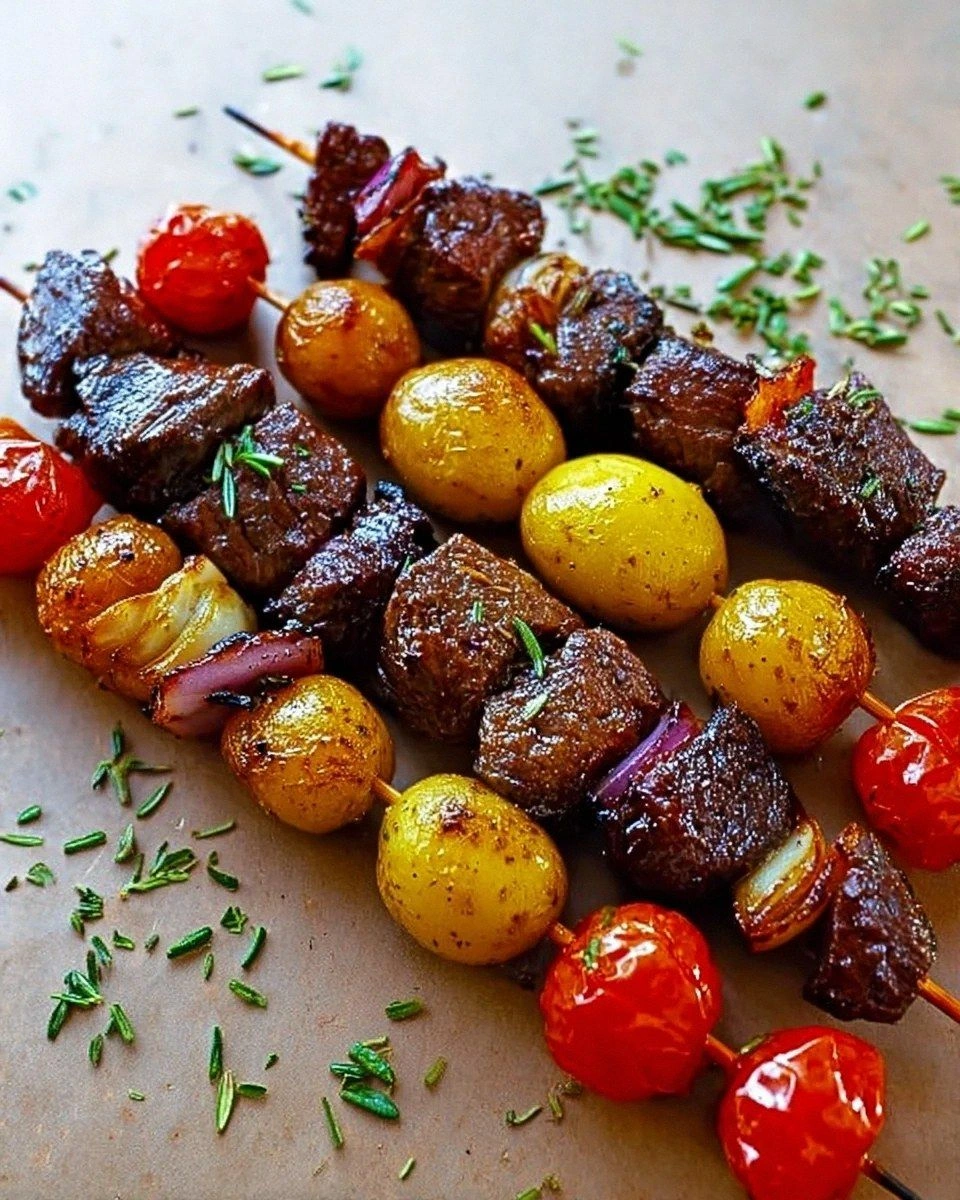
I still remember the carnage of my first attempt at steak kebabs—beautifully marinated beef cubes that clung to the grill grates like stubborn barnacles, rosemary twigs incinerated into bitter black needles, and garlic that leapt from the skewers into the flames, sizzling itself into oblivion while I stood there in a cloud of smoke wondering where it all went wrong. That disaster sent me on a six-month kebab crusade through farmers' markets, butcher counters, and late-night YouTube rabbit holes until I cracked the code for what I now call my Rosemary Garlic Steak Kebabs. Picture this: tender rib-eye that drinks up a garlicky, herb-flecked marinade that tastes like you bottled summer itself, threaded between sweet peppers that caramelize at the edges and onions that turn silky and jammy. The rosemary doesn't just perfume the meat—it becomes a basting brush when you strip the stalks and use them as skewers, dripping piney oils straight onto the fire. That aroma? It's what happens when a Mediterranean hillside collides with a backyard barbecue, and your neighbors will suddenly find reasons to wander over. If you've ever struggled with leathery steak chunks or vegetables that are either raw or mushy, you're not alone—and I've got the fix that'll make you throw away every other kebab recipe you've collected. Let me walk you through every single step—by the end, you'll wonder how you ever grilled it any other way.
What Makes This Version Stand Out
Flavor Bomb: We don't just marinate—we infuse. By micro-planing the garlic into a wet paste and bruising the rosemary leaves, you release every last drop of essential oil so the steak tastes like it's been aging in an herby spa for weeks, not hours.
Texture Perfection: Most recipes overcook the steak while waiting for the vegetables to catch up. We solve that by cutting the beef into pillowy 1¼-inch cubes that stay juicy even after a hard sear, and par-cooking denser veggies so everything finishes in sync.
Zero Stick Guarantee: Instead of threading meat and veg willy-nilly, we group like with like on separate skewers. That means you can slide the steak kebabs to the hot zone and the veggie ones to medium heat—no more sacrificing crust for charred peppers.
Smoke-Kissed Herbs: Using fresh rosemary stalks as skewers isn't just Instagram bait; the heat releases their oils in a fragrant plume that seasons the meat from the inside out. It's like having a built-in basting brush made of pine needles.
Speed Demon: Active prep is under 20 minutes if you multi-task while the grill preheats. The marinade works its magic in the same time it takes to fire up coals, so you can decide at 5 p.m. and still eat like royalty by 6.
Leftover Legend: These reheat like champs. Flash them in a cast-iron skillet tomorrow and toss the steak into tacos, the peppers into omelets, and the onions over toast slathered with goat cheese. Nothing goes to waste.
Inside the Ingredient List
The Flavor Base
Rib-eye is the Beyoncé of beef here—rich with marbling that bastes itself, keeping each cube buttery even over screaming-hot coals. Skip lean sirloin and you'll thank me later; the fat is flavor insurance. Extra-virgin olive oil carries fat-soluble garlic and rosemary compounds straight into the meat's muscle fibers, so every bite hums with herbaceous perfume. Use a peppery, green oil from a recent harvest; last year's bottle tastes like dusty library books and will mute the sparkle you're chasing.
The Texture Crew
Baby bell peppers bring candy-sweet crunch that contrasts the steak's richness, while red onion wedges turn soft and almost marmalade-like at their edges. Choose peppers the size of ping-pong balls so they cook through without charring into bitter flakes. Cut onions into thick petals; skinny pieces slip off skewers like reluctant swimmers. Cremini mushrooms are optional but stellar—they drink up marinade like sponges and add earthy depth that plays bassline to the rosemary's high notes.
The Unexpected Star
Here's the curveball: a whisper of balsamic vinegar. Not enough to make things taste like salad, but just a teaspoon per pound of steak to amplify the beef's natural sweetness and speed up the Maillard reaction on the grill. It also helps the edges caramelize into those dark, crispy nubbins that people fight over. If you're out, a squeeze of pomegranate molasses works too—anything with both acid and sugar to paint the meat with glossy, crackly edges.
The Final Flourish
After grilling, we hit the kebabs with lemon zest and flaky salt. The zest's oils lift the smoky richness while the crunchy salt crystals pop like tiny fireworks on your tongue. Maldon is my go-to, but any coarse sea salt works. Skip table salt unless you want your guests to feel like they're licking a salt lick.
Everything's prepped? Good. Let's get into the real action...
The Method — Step by Step
- Start by making the flavor paste because this is where the magic begins. Smash three fat garlic cloves with the flat of your knife, sprinkle on a pinch of coarse salt, and use the knife blade to grind everything into a wet, creamy paste that looks like spa-grade aloe. The salt acts as grit to break down the garlic's cell walls, releasing all those spicy, sulfurous compounds that'll bloom in the heat. Scrape that paste into a medium bowl big enough to toss steak cubes like you're flipping a salad. Add two tablespoons of olive oil, a teaspoon of balsamic, and a few cracks of black pepper; whisk until it looks like liquid gold flecked with tiny snowflakes of garlic.
- Now cube the rib-eye. Pat it very dry—water is the enemy of browning—and slice into 1¼-inch pieces. I know that sounds huge, but remember meat shrinks and you want juicy centers after a hard char. Toss the cubes into the bowl and use your hands to massage every nook with that fragrant paste. Really get in there like you're kneading stress balls; this isn't the time to be dainty. Cover and park on the counter while you prep everything else. Room-temp steak cooks more evenly than cold, so don't refrigerate unless you're marinating longer than an hour.
- Prep the vegetables with strategy. Halve the baby bell peppers and remove the seedy white ribs, but leave stems on—they act as little handles so the peppers don't commit suicide through the grill grates. Slice red onion into ¾-inch petals, keeping the root end intact so the layers stay threaded. If you're using mushrooms, choose ones the same diameter as your steak cubes so everything cooks evenly. Toss the veggies in a separate bowl with olive oil, salt, and a whisper of smoked paprika to echo the grill's perfume.
- Strip the rosemary stalks like you're peeling tough celery. Grab the tip and run two fingers down the stem; the leaves will zip off in one satisfying swoosh. Don't toss those bare stalks—they're your biodegradable skewers. Soak them in water for twenty minutes so they don't ignite into torches on the grill. Meanwhile, mince a tablespoon of the fresh leaves for a finishing sprinkle that tastes like you've wandered into an evergreen forest.
- Fire up the grill for two-zone cooking. You want one half ripping hot—about 450°F—for steak, and the other half medium—around 350°F—for vegetables. If you're on charcoal, bank the coals to one side; on gas, just turn one burner to high and leave the others on medium. Close the lid and let the grates heat until you can't hold your hand five inches above for more than two seconds. A properly hot grate sears instead of steams, giving you those gorgeous hash marks that scream "I know what I'm doing."
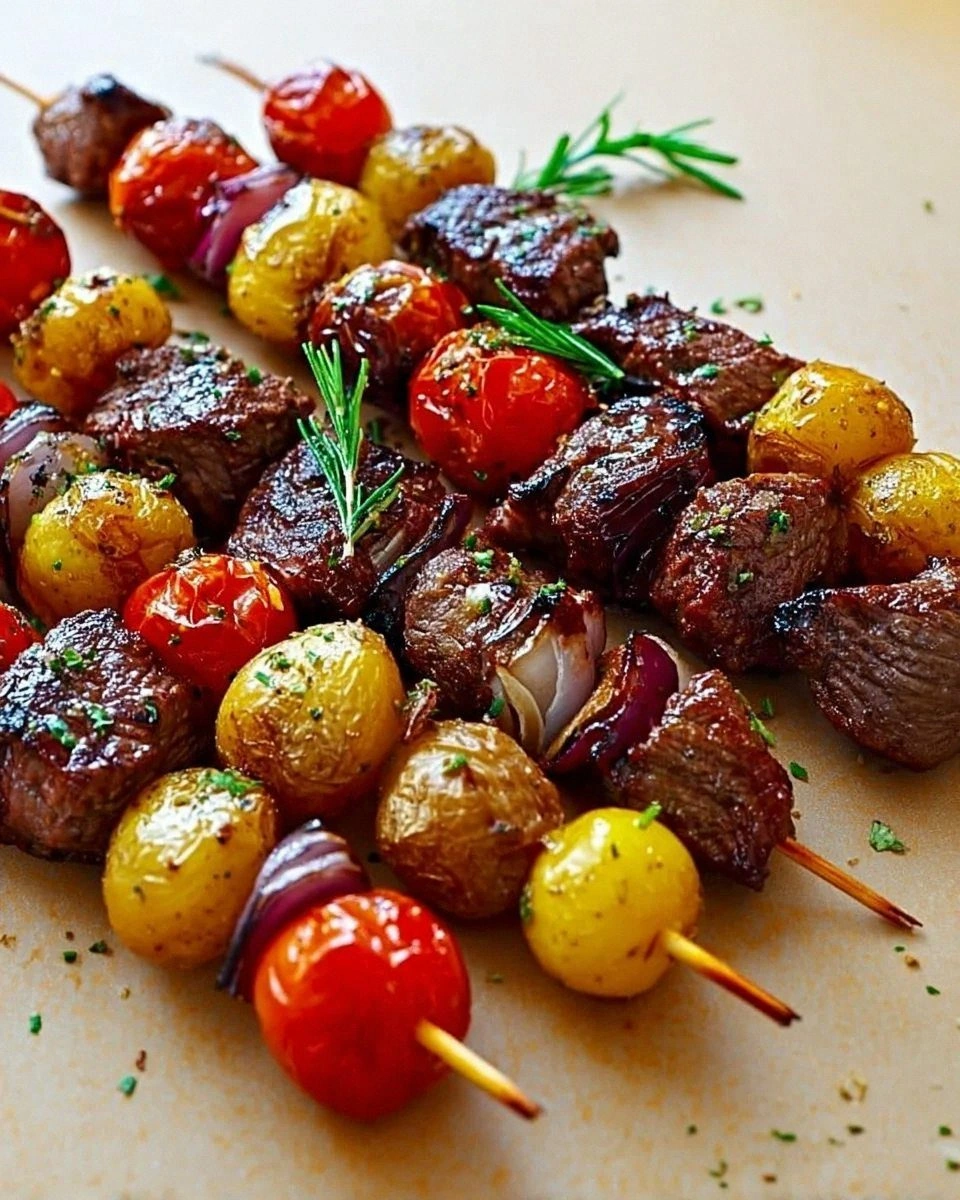
- Assemble skewers assembly-line style. Thread steak cubes onto wet rosemary stalks, packing them snug but not squished—airflow equals even cooking. Group vegetables on separate metal or bamboo skewers so you can shuffle them around the grill zones. Alternate colors for eye candy: red pepper, yellow, onion, mushroom, repeat. When you run out of rosemary, switch to soaked bamboo skewers, but always leave a tiny handle bare so you have something to grab without tongs slipping.
- Grill the steak skewers first. Lay them over direct heat and don't touch for two full minutes; that's when the crust forms. Rotate a quarter turn for cross-hatch beauty, then repeat until all four sides are mahogany. Move to indirect heat if flare-ups threaten—dripping fat loves to party. Total time is about eight minutes for medium-rare, but trust your eyes more than the clock. The meat should feel firm but still springy when pressed with tongs, and juices should just peek through the surface like shy gems.
- Add the vegetable skewers to the cooler zone once the steak is seared. Close the lid so convection heat can soften them through; open every two minutes to rotate and check for blistered skins. Peppers need about six minutes, onions eight, mushrooms five. You're aiming for edges that look like they spent a week in the Mediterranean sun—charred in spots, sweet and jammy inside. When a pepper blister pops and hisses, it's done.
- Rest everything on a platter tented loosely with foil for five minutes. I know the smoke smells like edible heaven, but patience equals juiciness. During this spa moment, the muscle fibers relax and reabsorb juices that would otherwise flood your cutting board. Finish by showering with fresh lemon zest, a flutter of minced raw rosemary, and those crunchy salt flakes. Serve right off the stalks—let guests pull their own skewers like edible swords.
That's it—you did it. But hold on, I've got a few more tricks that'll take this to another level...
Insider Tricks for Flawless Results
The Temperature Rule Nobody Follows
Most backyard cooks wait for the steak to feel "done" on the grill, but carry-over heat will push internal temp up five more degrees while resting. Pull your kebabs at 125°F for perfect medium-rare after the rest. A fast-read thermapen is worth its weight in gold here; poke through the side of a cube, not down from the top, to hit the geometric center. If you don't have a thermometer, use the face test: press the meat against your chin—if it feels like touching your cheek, it's rare; like touching your forehead, well-done; like touching the tip of your nose, you've nailed medium-rare.
Why Your Nose Knows Best
Trust aroma over timers. When you smell garlic turning nutty and rosemary hitting pine-resin notes, you're thirty seconds from perfect. That scent means the Maillard reaction is in full swing and sugars are caramelizing. If you walk away to grab a beverage and come back to acrid smoke, you've crossed into bitter territory—move the skewers to indirect heat immediately and consider it a teachable moment.
The 5-Minute Rest That Changes Everything
Resting isn't optional—it's the difference between succulent and Sahara. But don't just park them on a cold plate; place the platter in a turned-off microwave or low oven so the ambient heat keeps the exterior from congealing. Tent with foil shiny-side down to reflect heat back onto the meat. If you're serving a crowd, rest the steak skewers first, then pop the veggie ones back on the grill for a quick reheat while you slice rustic bread and pour the wine.
Creative Twists and Variations
This recipe is a playground. Here are some of my favorite ways to switch things up:
Mediterranean Sunset
Swap balsamic for pomegranate molasses and thread in cherry tomatoes that burst into sweet lava bombs. Finish with crumbled feta and a drizzle of tahini thinned with lemon juice. The molasses gives a tangy-sweet glaze that makes the edges candy-crisp.
Asian-Fire Fusion
Replace olive oil with sesame, add a spoon of gochujang to the marinade, and finish with toasted sesame seeds and scallion threads. Serve wrapped in lettuce leaves with quick-pickled cucumbers for a Korean-Mexican mash-up that'll blow your mind.
Surf & Turf Carnival
Alternate steak cubes with butterflied shrimp that curl into pink commas in under two minutes. Brush with garlic butter spiked with Old Bay. Shrimp live on the hot zone, steak on medium—swap positions so seafood picks up smoky fat drippings.
Autumn Harvest
Thread in cubes of butternut squash par-roasted for ten minutes so they finish grilling at the same pace as the steak. Add sage leaves that crisp into translucent chips. A final glaze of maple syrup in the last minute turns everything into a caramel dream.
Breakfast on a Stick
Serve leftover steak kebabs cold the next morning dunked into soft-boiled eggs dusted with everything-bagel seasoning. Add a side of grilled tomato halves and you've got the world's most satisfying camping-style breakfast without the campfire.
Storing and Bringing It Back to Life
Fridge Storage
Slide everything off the skewers into a lidded glass container, keeping steak and veggies separate so flavors stay distinct. They'll cruise happily for up to four days at 38°F. Line the container with a paper towel to wick away condensation that causes sogginess. Always cool completely before sealing; trapping steam is the express lane to mush-town.
Freezer Friendly
Freeze steak cubes in a single layer on a parchment-lined sheet pan, then transfer to freezer bags so you can grab handfuls for tacos. They'll keep three months without quality drop-off. Vegetables don't freeze well here—they turn to mush—so grill only what you'll eat and freeze the marinated raw steak for future lightning-fast dinners.
Best Reheating Method
Skip the microwave unless you enjoy rubber. Instead, heat a cast-iron skillet until it just starts to smoke, add a teaspoon of oil, and sear the steak for 45 seconds per side. Add a tiny splash of water and immediately clamp on a lid; the steam resurrects juiciness without overcooking. For veggies, toss them into the same pan after the steak's done—the residual heat warms them through without turning them to baby food.