Picture this: it's 11 p.m. on a Tuesday, I'm standing in my kitchen wearing mismatched socks, holding a half-eaten block of Gruyere like it's a microphone, and cursing the name of every food blogger who ever claimed their potato gratin was "the best." Because you know what? They were lying. Their gratins were sad, floppy potato puddings with rubbery tops and zero personality. I wanted something that would make me weep with joy. Something that would make my neighbors knock on the door at midnight because the smell was driving them insane. Something with edges so crispy they shatter like thin ice under your fork, and a center so creamy it could moonlight as velvet.
So I did what any reasonable, cheese-obsessed maniac would do: I spent three weeks testing seventeen different versions, burned two pans beyond recognition, and turned my kitchen into a potato crime scene. My roommate started labeling the leftovers in the fridge with passive-aggressive sticky notes like "DO NOT TOUCH — POTATO EXPERIMENT #12." But then, on a rainy Thursday that smelled like hope and garlic, it happened. The gratin of my dreams emerged from the oven — bubbling like hot lava, golden like a Mediterranean sunset, and singing a siren song of caramelized cheese that had me doing a victory dance in my pajamas.
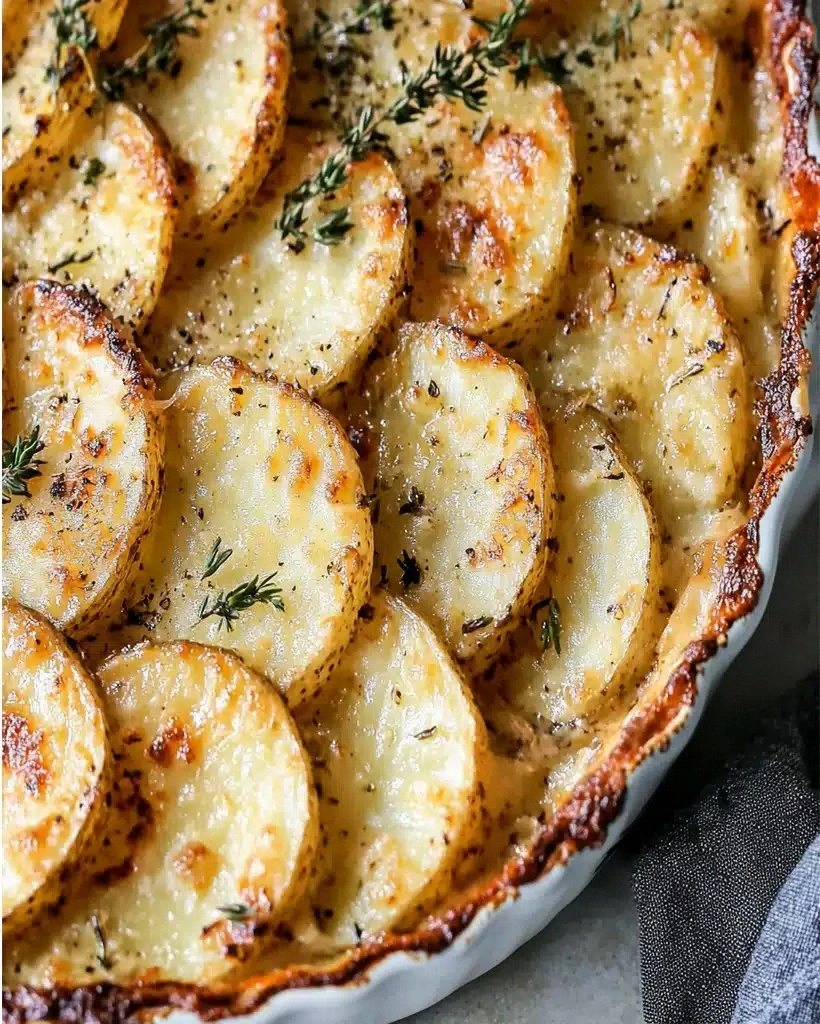
This is not your grandma's potato gratin (unless your grandma was a culinary genius who liked to party). We're talking layers of paper-thin potatoes swimming in a bath of cream infused with roasted garlic and fresh thyme, topped with a reckless avalanche of nutty Gruyere and salty Parmesan that transforms into a crispy cheese frisbee of happiness. The edges are basically potato chips wearing tuxedos, and the center is so luxurious you'll want to write poetry about it. I dare you to taste this and not go back for thirds.
What makes this version different? Oh honey, buckle up. We're about to flip everything you think you know about potato gratin on its head. No floury béchamel to dull the flavors. No timid cheese ratios that leave you wondering if someone forgot the dairy. No sad, steamed potatoes that taste like disappointment. Instead, we're using a technique I discovered by accident when I got distracted by a group chat argument about whether a hot dog is a sandwich (it's not, fight me). The result? Potatoes that retain just enough bite to remind you they exist, swimming in sauce so flavorful you'll want to bottle it and wear it as perfume. Let me walk you through every single step — by the end, you'll wonder how you ever made it any other way.
What Makes This Version Stand Out
Cheese Avalanche: Most recipes are stingy with the cheese, sprinkling it like they're paying rent in dairy. This gratin uses a mountain of Gruyere and Parmesan that creates a crispy, lacy crust that'll make you weak in the knees. The ratio is obscene in the best possible way.
Edge City: Those burnt cheesy edges that everyone fights over? We've engineered the entire dish to maximize them. Every bite comes with a shard of caramelized cheese that shatters like glass, revealing molten potato underneath. It's architectural genius disguised as dinner.
No Flour, No Problem: Traditional gratins use flour to thicken the cream, which ends up tasting like kindergarten paste. We skip it entirely, letting the natural potato starches and reduced cream create a sauce that coats each slice like liquid silk. The result is cleaner, brighter flavors that let the cheese sing.
Make-Ahead Magic: This gratin actually improves overnight. The flavors meld and intensify, and reheating it creates even more of those coveted crispy edges. I make a double batch just so I can eat it for breakfast cold from the fridge like a culinary rebel.
Texture Tango: Through precise slicing and strategic layering, every forkful delivers a perfect balance of meltingly tender potatoes, al dente centers, and crispy cheese. It's like a potato textural symphony where every instrument plays in harmony.
Crowd Psychology: I've served this at dinner parties where people who claimed they were "cutting carbs" literally licked their plates. It's the dish that makes grown adults fight over the last corner piece like it's the last lifeboat on the Titanic.
Ingredient Integrity: No shortcuts, no powdered cheese, no sad pre-shredded stuff that tastes like sawdust. We use real Gruyere that costs more than a movie ticket, and Parmesan that's been aged longer than some TikTok stars have been alive. Your taste buds will know the difference.
Inside the Ingredient List
The Flavor Foundation
The potatoes are obviously the star here, but not just any spud will do. You need waxy varieties like Yukon Gold or fingerlings that hold their shape under dairy assault. Russets will dissolve into potato soup, and while that might sound appealing at 2 a.m. after a few drinks, it's not what we're after. These golden beauties have just enough starch to help thicken the cream while maintaining their structural integrity. Slice them to exactly 1/8-inch thickness — any thicker and you'll get crunchy centers, any thinner and they'll vanish into the sauce like shy party guests.
Heavy cream is the luxurious bath we're giving our potato spa treatment. Don't you dare reach for half-and-half or milk unless you want a watery disappointment that tastes like regret. We're using real, honest-to-goodness heavy cream that could probably be classified as a controlled substance in some states. It reduces down into something so rich and unctuous that you'll understand why French cuisine has a reputation for inducing spontaneous proposals of marriage.
The Cheese Dream Team
Gruyere is the sophisticated older sibling in our cheese family — nutty, slightly sweet, with a complexity that makes you want to book a trip to Switzerland immediately. When it melts, it becomes stretchy and gooey in a way that makes for excellent cheese pulls if you're into that kind of food photography. The key is buying the good stuff that's been aged 8-12 months. Anything younger tastes like disappointment, anything older becomes too crumbly and refuses to melt properly. Yes, it's expensive. No, you cannot substitute it with "Swiss cheese" from a plastic package unless you want to break my heart.
Parmigiano-Reggiano is the salty, umami bomb that takes this gratin from "pretty good" to "I need to sit down and think about my life choices." Don't even think about using the powdered stuff that comes in a green can — that's not cheese, that's cheese's evil twin who went to prison. Real Parmesan adds crystalline texture and a depth of flavor that makes you understand why Italians live longer despite all that pasta. Grate it fresh, and save the rind for your next soup. Your future self will thank you.
The Aromatics Alliance
Garlic gets roasted whole until it transforms from sharp and aggressive to sweet and mellow. We're talking garlic that's been in the oven so long it's practically spreading rumors about you. When you squeeze those cloves out, they emerge like golden paste that's begging to be mashed into the cream. Raw garlic would punch you in the face, but roasted garlic gives you a gentle hug and whispers sweet nothings about flavor.
Fresh thyme brings an herby, slightly lemony note that cuts through all that richness like a sophisticated friend who keeps you from embarrassing yourself at parties. Dried thyme tastes like dusty library books in comparison. Strip those tiny leaves off the stems and watch them rain down like green confetti over your dairy kingdom. The stems go into the cream while it simmers, infusing their essence before being banished to the compost bin.
The Unexpected Star
Here's where things get weird and wonderful: a whisper of nutmeg. I know, I know, you're thinking "nutmeg in potatoes?" but trust me on this one. It's like adding a secret ingredient that nobody can identify but everyone agrees makes the dish taste more expensive. Just a few gratings — we're talking maybe 1/8 teaspoon — adds warmth and complexity that makes people ask if you went to culinary school in France. My grandmother swore by this trick, and that woman could make grown men cry with her cooking.
White pepper sneaks in at the end because we're classy like that. It's subtler than black pepper, adding gentle heat without the visual distraction of black specks in your pristine cream sauce. Plus, using white pepper makes you feel like you're cooking in a fancy restaurant where the chef yells at everyone in French.
Everything's prepped? Good. Let's get into the real action...
The Method — Step by Step
- Roast Your Garlic Like Your Life Depends on It: Preheat your oven to 400°F. Take a whole head of garlic, slice off the top quarter to expose all those beautiful cloves, drizzle it with olive oil, wrap it in foil, and throw it in the oven for 40 minutes. Your house will start smelling like you've summoned a garlic deity, and that's exactly what we want. When it's done, those cloves will squeeze out like golden toothpaste of the gods. Mash them into a paste and set aside. This is the foundation of flavor that'll make people wonder if you've been holding out on them with secret family recipes.
- Slice Potatoes With Surgical Precision: While the garlic roasts, grab your mandoline slicer (or practice your knife skills if you're feeling brave). Slice your Yukon Golds to exactly 1/8-inch thickness. Too thick and you'll bite into crunchy potato surprises, too thin and they'll dissolve like tissue paper in the rain. As you slice, drop them into a bowl of cold water to prevent browning and rinse off excess starch. This isn't just busy work — it's the difference between cloudy cream sauce and crystal-clear dairy luxury.
- Infuse Your Cream Like a Witch Brewing Potions: In a saucepan, combine heavy cream, the roasted garlic paste, thyme sprigs, a bay leaf if you're feeling fancy, and bring it to the gentlest simmer possible. We want tiny bubbles around the edges, not a rolling boil that'll turn your cream into an oil slick. Let it reduce by about one-third while you sing it lullabies. This concentrates the flavors into something so intense it'll make your eyes roll back in your head.
- Cheese Strategy is Everything: Grate your Gruyere and Parmesan separately because they have different melting personalities. Gruyere is the social butterfly that melts into stretchy, gooey networks. Parmesan is the introvert that crisps up and creates those lacy edges we crave. Mix two-thirds of each cheese together for the layers, reserving the rest for the crown that'll become our crispy roof. This isn't just cheese distribution — it's architectural planning for maximum texture contrast.
- Assembly Line Madness: Butter your baking dish like you're trying to prevent a small boat from sinking. Start with a layer of potatoes, overlapping them like fish scales. Season with salt and white pepper, then pour over just enough cream to barely cover. Sprinkle with the cheese mixture and whisper sweet nothings to it. Repeat until you've used all your potatoes, ending with cream and a final aggressive layer of cheese that would make a Frenchman nervous.
- The Foil Trap: Cover the dish with foil, but here's the trick — tent it so it's not touching the cheese top. We want steam to circulate and cook the potatoes through, not create a cheesy skin that'll peel off like sunburn. Bake at 375°F for 45 minutes, during which time your kitchen will start smelling like what I imagine heaven's cafeteria smells like. Don't peek. Don't even think about it. Let the magic happen.
- Crispy Revelation Time: Remove the foil and crank the oven to 425°F. This is when things get real. The cheese will start bubbling and browning, creating those coveted crispy edges. Watch it like a hawk because the line between perfectly caramelized and burnt cheese sadness is approximately 45 seconds. When it's golden and the edges are deep mahogany, pull it out and resist the urge to face-plant directly into it.
- The Rest That Tests Human Willpower: Here's where most people mess up — they try to serve it immediately. But this gratin needs to rest for 15 minutes to let the sauce thicken and the layers set. Cover it loosely with foil and occupy yourself by cleaning up or pretending you're not counting down the seconds. When you finally serve it, the layers will hold together like a sophisticated potato lasagna instead of collapsing into gratin soup.
- Final Flourish and Serving Theater: Just before serving, shower the top with fresh thyme leaves and watch them dance in the residual heat. Serve it in the center of the table so everyone can admire the golden crust before you break through to the creamy layers beneath. The first scoop is always the most dramatic — use a sharp knife to cut through the crispy top, then a serving spoon to lift out perfect portions. Watch people's eyes widen as the cheese stretches like mozzarella on a pizza commercial.
That's it — you did it. But hold on, I've got a few more tricks that'll take this to another level...
Insider Tricks for Flawless Results
The Temperature Rule Nobody Follows
Your potatoes need to be room temperature before they hit the cream. Cold potatoes will seize the cream and create a grainy texture that'll have you wondering where you went wrong. Take them out of the water 30 minutes before assembly and let them come to temperature. I learned this the hard way when I rushed a batch for a dinner party and ended up with a sauce that looked like cottage cheese having an identity crisis. Your guests will never know why your gratin is silkier than theirs, but you'll know it's because you followed this rule like a dairy-loving detective.
Why Your Nose Knows Best
Forget timers — your nose is the most sophisticated kitchen tool you own. When the gratin is almost done, it'll start sending out aromatic signals that smell like someone opened a cheese shop in a butter factory. That's your cue to check the color. When it smells like you want to bottle the air and wear it as perfume, you're 2-3 minutes away from perfection. I've had friends text me from other states claiming they could smell when my gratin was ready. Okay, that's a lie, but it should be true.
The 5-Minute Rest That Changes Everything
I know you're hungry. I know the smell is driving you insane. But cutting into this gratin immediately is like opening presents on Christmas Eve — technically possible but spiritually wrong. Those five extra minutes allow the cream to thicken and the layers to settle. When you finally serve it, each portion holds together like a sophisticated potato cake instead of sliding apart like a dairy avalanche. My roommate once tried to rush this step and ended up with a plate that looked like cheese soup with potato croutons. We don't speak of that day.
The Cheese Age Sweet Spot
Your Gruyere should be aged 8-12 months for optimal melting. Too young and it becomes stringy like bad mozzarella, too old and it refuses to melt, creating cheese pebbles that roll off your fork. Ask your cheesemonger (yes, you're fancy enough to have a cheesemonger now) for "melting age" Gruyere. They'll know exactly what you mean and probably compliment your sophisticated palate. If they try to sell you something that costs more per pound than your car payment, smile politely and ask for a smaller piece. Even a little good cheese beats a mountain of mediocre.
The Mandoline Safety Waltz
That mandoline slicer sitting in your drawer is a potato's best friend and a finger's worst enemy. Use the hand guard, even if you feel like a kitchen ninja who doesn't need safety equipment. I've seen professional chefs with more scars than a boxing promoter, all from underestimating these medieval potato torture devices. Slice halfway through your potato, then flip it and slice from the other side. This gives you maximum potato usage while keeping your fingerprints intact for future gratin-making adventures.
Creative Twists and Variations
This recipe is a playground. Here are some of my favorite ways to switch things up:
The French Onion Situation
Caramelize three large onions until they're deep mahogany and spread them between the potato layers. The sweetness plays against the salty cheese like a culinary rom-com. Top with crispy shallots for crunch. This version is so good it once caused a vegetarian to propose marriage to me. I said yes, then remembered I don't believe in marrying people just because they can cook.
The Truffle Shuffle
Add a few drops of white truffle oil to the cream and replace half the Gruyere with fontina. It's outrageously luxurious and will have people speaking in hushed tones about your refined palate. Just don't tell them the truffle oil costs less than a fancy coffee. Sometimes the magic is in the perception, darling.
The Breakfast Betrayal
Add layers of crispy bacon and crack eggs into wells on top during the last 10 minutes of baking. The eggs poach in the cream while the bacon adds smoky depth. Serve it at brunch and watch people lose their minds over the fact that they can now eat gratin for breakfast. Sometimes being an enabler is delicious.
The Mediterranean Escape
Swap half the cream for good quality feta brine, add layers of roasted red peppers and Kalamata olives, and use Kasseri cheese instead of Gruyere. It's like taking your taste buds on vacation to Santorini without the expensive plane ticket. The briny, tangy notes cut through the richness like a cool sea breeze.
The Autumn Romance
Add thin layers of butternut squash and sage brown butter. The squash melts into the potatoes while the sage adds earthy warmth. This version tastes like wearing cozy sweaters while jumping in leaf piles. It's basically autumn in casserole form, and yes, you should absolutely serve it at Thanksgiving if you want to become a family legend.
The Fire Escape
Add thinly sliced jalapeños between layers and use pepper jack instead of Gruyere. The cream tempers the heat while the crispy cheese edges pack a spicy punch. It's like your gratin went on a gap year to Mexico and came back with stories and a tattoo. Serve it to people who think they don't like spicy food — they'll convert faster than you can say "more cream, please."
Storing and Bringing It Back to Life
Fridge Storage
Let the gratin cool completely, then cover it with plastic wrap pressed directly against the surface to prevent that gross skin from forming. It'll keep for up to 5 days, though honestly, it never lasts that long in my house. Store it in the deepest part of your fridge where hungry roommates can't find it. I've been known to hide mine behind the kale — it's like gratin camouflage.
Freezer Friendly
This gratin freezes beautifully, which is dangerous because it means you can have cheesy potato perfection at a moment's notice. Cut it into portions, wrap each piece in plastic wrap then foil, and freeze for up to 3 months. Thaw overnight in the fridge before reheating. Pro tip: freeze individual portions in muffin tins, then pop them out like gratin hockey pucks. Instant single-serve comfort food for those nights when you need a friend who won't judge you.
Best Reheating Method
Forget the microwave unless you enjoy rubbery cheese sadness. Reheat in a 350°F oven for 15-20 minutes, covered with foil for the first half to prevent over-browning. Add a tiny splash of cream or milk before reheating — it steams back to life like a potato phoenix rising from the ashes of yesterday's dinner. The edges will actually get crispier than the first time, which is basically kitchen sorcery. If you're in a hurry, a toaster oven works in a pinch, but keep an eye on it. Good things come to those who wait, but great things come to those who reheat properly.