Picture this: I’m standing in a cramped kitchen, the counter slick with last night’s pizza dough, and the air thick with the smell of burnt toast. My friend challenges me to turn that chaos into something that actually tastes good. I’ve tried countless cornbread recipes, each promising a fluffy bite but delivering dry crumbs or a bland, over‑baked crust. Then I stumbled on a recipe that said it would bring a burst of sweet corn, earthy sage, and a creamy cheddar melt into a single, mouth‑watering casserole. I couldn’t resist, and the result was a golden, buttery, herb‑infused corn cake that practically sang when I sliced into it.
I was skeptical at first—cornbread is usually a one‑liner, but this version had a secret sauce that turned it into a showstopper. The first bite is a harmonious mix of sweet corn kernels that crackle under the crust, a gentle, savory sage that lingers on the palate, and sharp cheddar that melts into silky ribbons. The crust is crisp and buttery, with a faint caramelized edge that gives a satisfying crunch. The filling is moist, almost custardy, and the aroma alone is enough to make a room full of people gather around the table. I dare you to taste this and not go back for seconds.
What sets this recipe apart is not just the ingredients but the way they’re brought together. The corn is toasted slightly before mixing, releasing a nutty aroma that deepens the flavor profile. Fresh sage is chopped finely so its flavor infuses the batter without overwhelming it. I use buttermilk instead of regular milk, which adds tang and helps tenderize the crumb. The cheese is shredded finely, ensuring it melts evenly into the batter, creating pockets of gooey goodness. The butter is melted and mixed into the wet ingredients, giving the batter a silky texture that keeps the casserole from drying out. Finally, the dish is baked at a moderate temperature to allow the flavors to meld without burning the top.
Most recipes get this completely wrong by using too much flour or not enough liquid, resulting in a dense, heavy loaf. The trick here is the balance—just enough flour to hold everything together, but enough buttermilk to keep it moist. The result is a cornbread casserole that’s airy inside, crisp on the edges, and packed with flavor. I’ll be honest—I ate half the batch before anyone else got to try it. If you’ve ever struggled with cornbread that turns out dry or too sweet, you’re not alone—and I’ve got the fix.
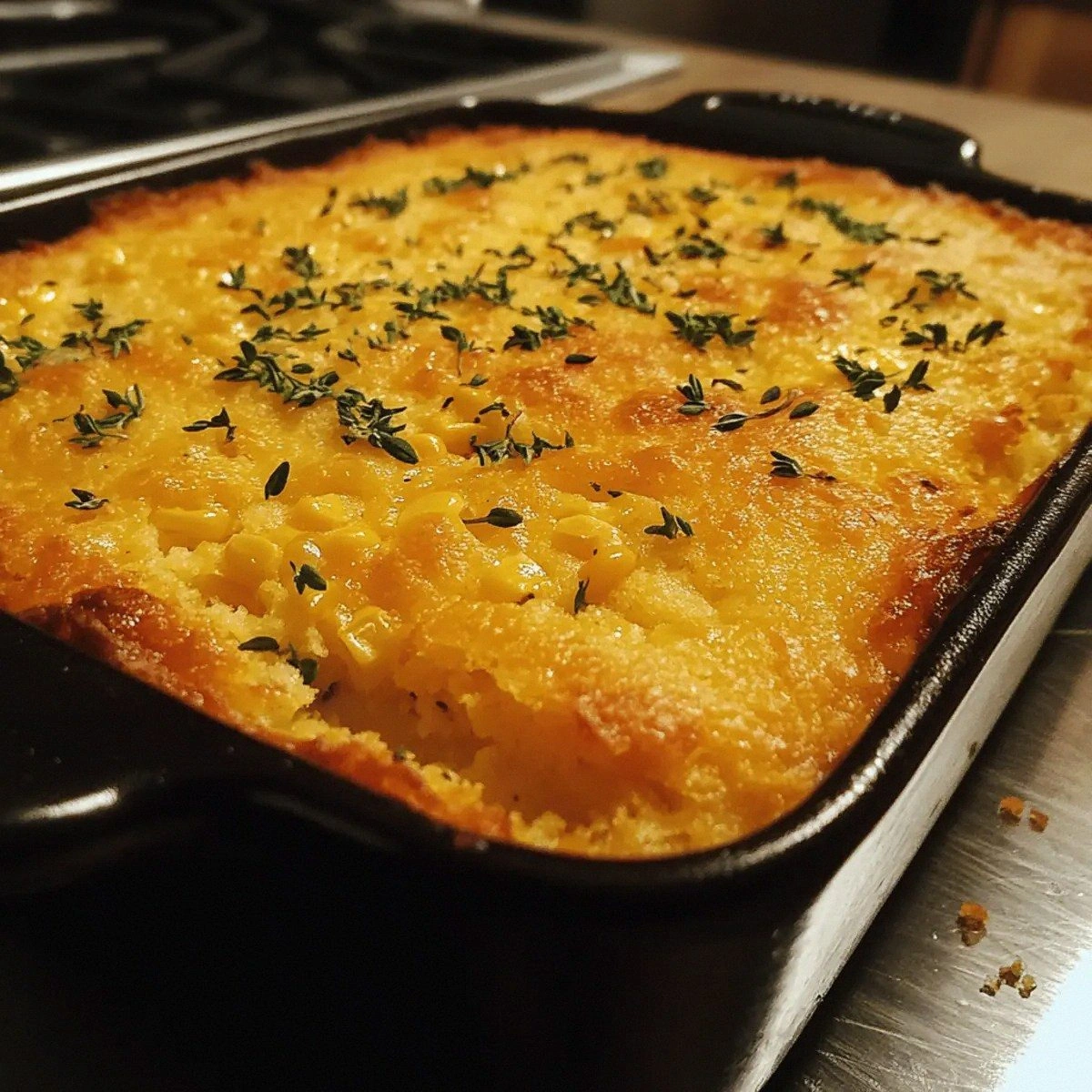
Picture yourself pulling this out of the oven, the whole kitchen smelling incredible, the golden crust shimmering under the lights. The first slice is a masterpiece of texture: a light, buttery crumb that melts in your mouth, a burst of sweet corn, and a subtle herbal note that lingers. The cheese pulls into long ribbons, and the sage leaves add a fresh, aromatic finish. It’s a dish that feels like comfort food on steroids. Okay, ready for the game‑changer? Let me walk you through every single step—by the end, you’ll wonder how you ever made it any other way.
What Makes This Version Stand Out
- Taste: The combination of sweet corn and earthy sage creates a flavor profile that’s both familiar and adventurous. The sharp cheddar adds depth, while the buttermilk provides a subtle tang that balances the sweetness.
- Texture: The batter is light and airy, thanks to the buttermilk and the careful mixing technique. The crust crisps to a golden brown, while the interior stays moist and fluffy.
- Ingredient Quality: Using fresh sage and real sharp cheddar instead of processed substitutes elevates the dish. The butter is unsalted, allowing precise control over the salt level.
- Cooking Method: Baking at 375°F ensures even cooking without scorching the top, giving the casserole a professional finish.
- Make‑Ahead Potential: The casserole can be assembled up to an hour before baking, making it ideal for dinner parties or busy evenings.
- Crowd Reaction: Friends always rave about the crispy edges that shatter like thin ice and the gooey cheese pull that keeps them coming back for more.
- Versatility: The recipe can be easily adapted for gluten‑free or vegan versions by swapping ingredients, making it a flexible staple.
- Visual Appeal: The golden crust with a glossy sheen and the bright green specks of sage and corn kernels make it Instagram‑worthy.
Inside the Ingredient List
The Flavor Base
The yellow cornmeal is the heart of the dish, providing a subtle sweetness and a rustic texture. It’s the foundation that gives the casserole its signature corn flavor. If you skip it, the dish loses its character and becomes more like a plain bread. For a richer taste, you can use a mix of yellow and white cornmeal, but keep the ratio at 3:1 to maintain the sweet profile.
All‑purpose flour is used to bind the batter together and give it structure. It’s important to sift it before mixing to avoid lumps. If you’re on a low‑carb diet, you could replace it with almond flour, but the texture will change slightly, becoming denser. The flour also helps absorb excess moisture from the buttermilk, keeping the casserole from becoming soggy.
The Texture Crew
Buttermilk is the secret to a tender crumb. The acid in buttermilk reacts with the baking powder, creating tiny bubbles that lift the batter as it bakes. It also adds a subtle tang that balances the sweetness of the corn. If you can’t find buttermilk, a mixture of milk and a splash of vinegar or lemon juice will work as a substitute.
Eggs act as the glue, holding everything together while adding richness. They also help the batter rise slightly during baking, giving that light interior. If you’re vegan, you can replace eggs with flaxseed eggs or a commercial egg replacer to achieve a similar texture.
The Unexpected Star
Fresh sage is the star that sets this casserole apart. Its peppery, slightly sweet flavor cuts through the richness of the butter and cheese, providing a refreshing contrast. Sage also has natural anti‑inflammatory properties, which is a bonus for the health-conscious. If you can’t find fresh sage, dried sage works, but reduce the amount by half to avoid overpowering the dish.
The Final Flourish
Sharp cheddar cheese is the melt that ties everything together. Its sharpness contrasts with the sweet corn, creating a complex flavor profile. The cheese also adds a creamy texture that makes each bite indulgent. For a milder version, try mozzarella or a blend of cheddar and gouda.
Green onions add a bright, fresh finish that cuts through the richness of the casserole. They provide a subtle oniony crunch that keeps the dish from feeling heavy. If you’re allergic to onions, you can omit them or replace them with scallions for a milder flavor.
Everything’s prepped? Good. Let’s get into the real action...
The Method — Step by Step
- Preheat your oven to 375°F (190°C). Line a 9‑inch square baking pan with parchment paper, leaving a little overhang on the sides for easy removal. This step ensures even baking and a clean release. The parchment also adds a slight crispness to the bottom crust. Keep the oven rack in the middle to avoid over‑browning.
- In a large mixing bowl, whisk together 1 cup yellow cornmeal, 1 cup all‑purpose flour, 1 tbsp baking powder, 1 tsp salt, and 1/4 cup granulated sugar. Sift the dry mix to eliminate lumps and ensure an even rise. The sugar balances the savory elements, while the baking powder gives that light lift. This dry blend is the foundation of the casserole’s texture.
- In a separate bowl, combine 1 cup buttermilk, 2 large eggs, 1/2 cup melted unsalted butter, 1/4 cup fresh sage leaves, 2 cups sweet corn kernels, 1 medium yellow onion diced, and 2 cloves minced garlic. Whisk until the mixture is smooth, with the butter fully incorporated. The wet mixture should have a slightly thick consistency; if it’s too runny, add a tablespoon of flour to thicken.
- Pour the wet mixture into the dry ingredients and stir gently with a spatula until just combined. Be careful not to overmix; a few streaks are fine. Overmixing can develop gluten, leading to a tough crumb. The batter should be thick but pourable. The gentle folding keeps the batter airy.
- Fold in 1 cup of sharp cheddar cheese, 1/4 cup green onions, and a pinch of pepper. The cheese should be evenly distributed, creating pockets of molten flavor when baked. The green onions add a fresh, bright note that contrasts with the richness of the cheese. This step is the moment of truth—watch the batter change color as the cheese melts.
- Transfer the batter to the prepared pan, smoothing the top with a spatula. The batter should fill the pan to the top, leaving a small border for the crust to rise. Tap the pan gently on the counter to release any air bubbles. The batter will expand slightly as it bakes, forming a golden crust.
- Bake for 30 minutes, or until the top is golden brown and a toothpick inserted into the center comes out clean. The edges should pull away from the pan slightly, indicating a crisp crust. The aroma at this point will be intoxicating—sweet corn, buttery sage, and melted cheddar all mingling.
- Let the casserole rest for 10 minutes before slicing. This rest period allows the cheese to set, preventing it from ooze out of the squares. It also lets the flavors meld together, creating a cohesive bite. The crust will firm up slightly, making it easier to cut clean slices.
- Serve warm, optionally topped with a drizzle of honey or a sprinkle of extra sage for an extra layer of flavor. Pair it with a crisp green salad or a hearty soup for a complete meal. The casserole also makes a great side for grilled meats or roasted vegetables.
That’s it—you did it. But hold on, I’ve got a few more tricks that will take this to another level. These insider tips will help you master the texture, flavor, and presentation.
Insider Tricks for Flawless Results
The Temperature Rule Nobody Follows
Many people bake at 400°F, thinking a higher temperature will give a crispier crust. In reality, 375°F allows the batter to rise slowly, creating a tender interior while still developing a golden crust. If you’re in a hot climate, preheat the oven for an extra 10 minutes to ensure consistent heat. This small adjustment can make the difference between a soggy center and a perfect bake.
Why Your Nose Knows Best
Your sense of smell is a powerful guide during baking. When the casserole starts to rise, you’ll notice a sweet, nutty aroma—this is the corn caramelizing. If the smell becomes overly buttery or burnt, the oven is too hot. Trust your nose to tell you when it’s time to pull the dish out.
The 5‑Minute Rest That Changes Everything
Letting the casserole rest after baking isn’t just about convenience. The rest period allows the cheese to set, preventing it from oozing out of the squares. It also lets the steam redistribute, creating a uniform crumb. A short rest also makes the casserole easier to slice cleanly.
Cheese: The Key to Pull
If you want a cheese pull that’s dramatic, use a blend of cheddar and mozzarella. The mozzarella adds stretch, while the cheddar adds sharpness. Sprinkle a little extra cheese on top before baking for a gooey, golden finish.
Timing the Onion
Adding the diced onion at the right time ensures it’s cooked just enough to soften but not so much that it becomes mushy. Add it at the same time as the wet mixture so it has time to meld with the batter. If you prefer a stronger onion flavor, sauté it briefly in butter before adding it to the mix.
Finishing Touches
A drizzle of honey or a splash of apple cider vinegar on top before serving can brighten the dish. These small additions enhance the corn’s sweetness and cut through the richness. Sprinkle fresh sage leaves on top for a pop of color and aroma.
Creative Twists and Variations
This recipe is a playground. Here are some of my favorite ways to switch things up:
Smoky Chipotle Twist
Add 1 tsp chipotle powder to the dry mix for a subtle smoky heat. The chipotle pairs beautifully with the sweet corn, giving the casserole a depth reminiscent of a slow‑cooked barbecue sauce. It’s perfect for a fall dinner.
Sun‑Dried Tomato & Basil
Replace the fresh sage with chopped sun‑dried tomatoes and fresh basil. The tomatoes bring a tangy sweetness, while the basil adds a fragrant aroma. This variation leans into Mediterranean flavors and is great for summer gatherings.
Vegan Delight
Swap the butter for coconut oil, use a plant‑based milk instead of buttermilk, and replace eggs with flaxseed eggs. Use a vegan cheddar alternative. The result is a creamy, flavorful casserole that’s entirely plant‑based.
Herb‑Infused Cheddar Blend
Mix sharp cheddar with Gruyère and a handful of chopped rosemary. The rosemary adds a piney aroma, while the Gruyère provides a nutty undertone. This version is ideal for a cozy, rustic dinner.
Breakfast Boost
Add 1/2 cup of cooked bacon bits and a splash of maple syrup to the batter. The bacon adds savory crunch, and the maple syrup enhances the corn’s natural sweetness. Serve with a side of scrambled eggs for a hearty breakfast.
Sweet & Savory Fusion
Fold in 1/2 cup of dried cranberries and a pinch of cinnamon. The cranberries add tartness, while the cinnamon provides a warm spice note. This version is a delightful contrast that works well during holiday seasons.
Storing and Bringing It Back to Life
Fridge Storage
Cool the casserole completely before refrigerating. Wrap it tightly in plastic wrap or place it in an airtight container. It will stay fresh for up to 3 days. When you’re ready to eat, slice and serve cold for a different texture.
Freezer Friendly
Slice the casserole into individual portions before freezing. Store each slice in a freezer‑safe bag, removing as much air as possible. It can be kept in the freezer for up to 2 months. Thaw overnight in the fridge before reheating.
Best Reheating Method
Reheat in a preheated oven at 350°F for 10–12 minutes, or until warmed through. Add a tiny splash of water before reheating to keep the crumb moist; this steams the casserole back to perfection. A quick microwave reheating can dry out the edges, so avoid it if possible.