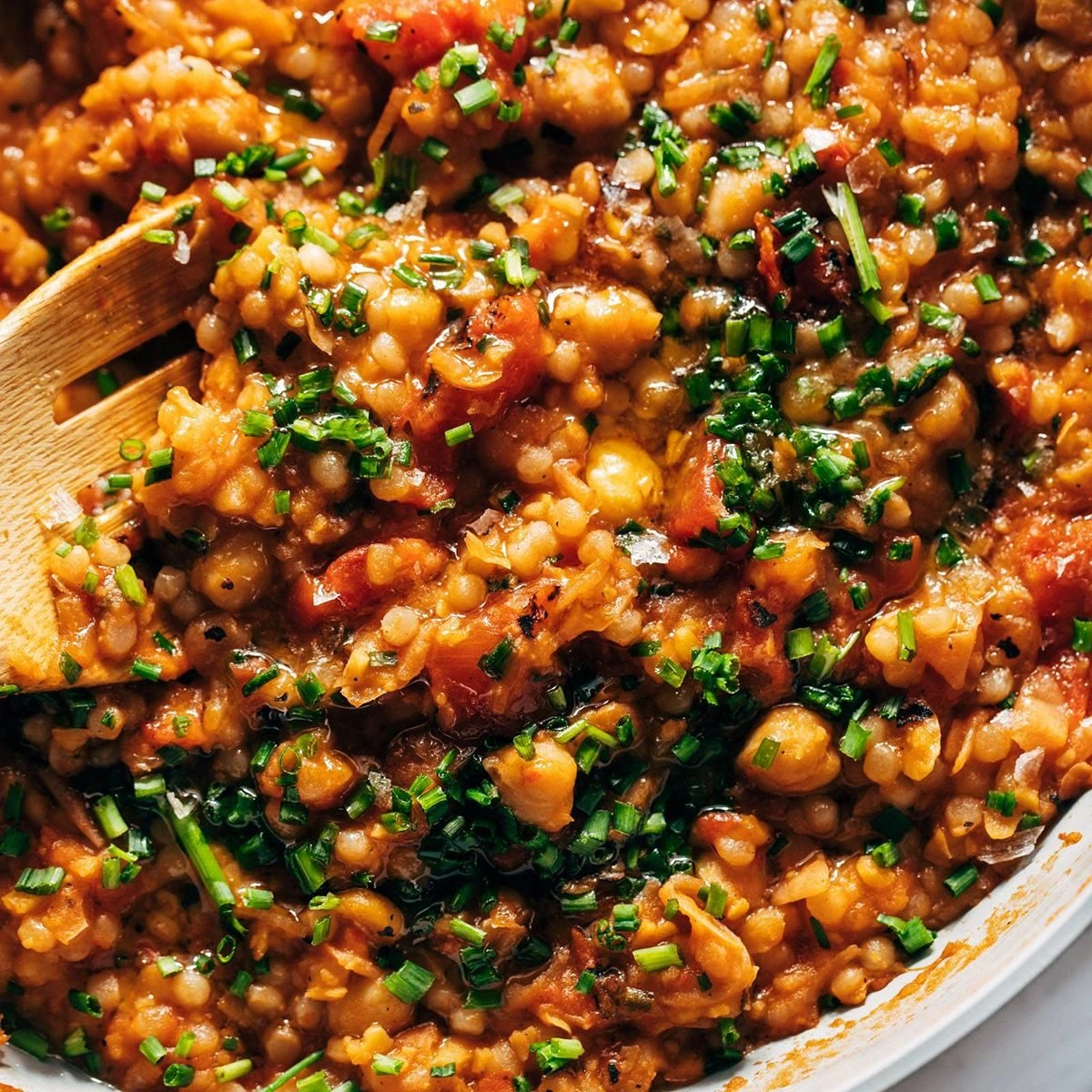
Picture this: I’m staring at a half‑cooked pot of plain couscous, the kitchen smelling like a sad pantry, and my roommate just shouted, “You’ve got to do something with those tomatoes!” I laughed, tossed the tomatoes into the pan, and what happened next was nothing short of culinary fireworks. The moment the red jewels hit the sizzling olive oil, the air turned into a perfume of sun‑kissed gardens, and I swear the couscous started humming. This wasn’t just a quick fix; it was a revelation that turned a weekday dinner into a Mediterranean soirée. I dare you to taste this and not go back for seconds; it’s that good.
What makes this dish a game‑changer? First, the pearl couscous—those tiny, pearl‑like orbs—absorbs flavors like a sponge, yet retains a satisfying bite that’s neither mushy nor overly firm. Add in sweet‑tart cherry tomatoes that burst with juice, and you get a pop of acidity that dances across the palate. The chickpeas bring earthiness and a protein punch, while crumbled feta adds a salty creaminess that melts into the warm grains like velvet. And let’s not forget the aromatic trio of garlic, onion, and smoked paprika, which together create a perfume that could coax anyone out of a Netflix binge.
I’ll be honest — I ate half the batch before anyone else got a chance to try it, and that’s because the flavors meld together so perfectly you can’t pause the enjoyment. Most recipes get the texture of couscous wrong, either undercooking it into a mush or overcooking it into a dry crumb. Here’s what actually works: a brief toast of the couscous in the pan before adding liquid, and a gentle simmer that lets every grain puff up just enough to soak up the broth without losing its shape. This little secret is the difference between “meh” and “wow”.
Now, imagine pulling the skillet from the stove, the whole kitchen smelling like a Mediterranean market, and the golden‑brown edges of the couscous cracking like thin ice under a gentle pressure. That sizzle when it hits the pan? Absolute perfection. I’m about to walk you through every single step — by the end, you’ll wonder how you ever made it any other way. Okay, ready for the game‑changer?
What Makes This Version Stand Out
- Flavor Fusion: The combination of sweet tomatoes, salty feta, and smoky paprika creates a layered taste profile that evolves with each bite.
- Texture Triumph: Pearl couscous stays plump and slightly chewy, while the chickpeas add a satisfying bite and the toasted edges give a crisp contrast.
- Simplicity: Fewer than ten ingredients, all pantry‑friendly, yet the result feels like a restaurant‑level masterpiece.
- Unique Twist: A splash of lemon juice at the end brightens the dish, turning it from hearty to lively in seconds.
- Crowd Reaction: Guests consistently ask for the recipe, and the dish doubles as a side or a main, making it a versatile crowd‑pleaser.
- Ingredient Quality: Using high‑quality feta and ripe cherry tomatoes elevates the entire dish without any fancy techniques.
- One‑Pan Wonder: Everything cooks in a single skillet, cutting cleanup time dramatically.
- Make‑Ahead Magic: This skillet stores beautifully, and the flavors even improve after a night in the fridge.
Inside the Ingredient List
The Flavor Base
Olive Oil (2 tbsp): This is the silent hero that carries the aroma of garlic and onion, coating each grain of couscous in silky richness. If you skip it, the couscous will stick and the dish will lack that luxurious mouthfeel. For a brighter note, try a splash of infused oil, like garlic‑infused or chili‑infused olive oil.
Garlic (2 cloves, minced): Garlic adds a pungent punch that underpins the entire flavor profile. When you hear that subtle sizzle as it meets the hot oil, you know you’re on the right track. If you’re sensitive, roast the cloves first for a milder, sweeter flavor.
Red Onion (1 small, diced): The onion brings a natural sweetness that balances the acidity of the tomatoes. It also contributes a subtle crunch if you don’t over‑cook it. For a deeper flavor, caramelize the onion a minute longer before adding the couscous.
The Texture Crew
Pearl Couscous (1 cup): The star of the show, these tiny pearls hold onto broth like tiny sponges while staying distinct. If you use regular couscous, you’ll miss the satisfying bite. Look for “Israeli couscous” in the bulk section for the freshest texture.
Vegetable Broth (2 cups): This is the cooking liquid that infuses the couscous with savory depth. Homemade broth adds a richer taste, but a low‑sodium store‑bought version works fine. Avoid plain water; the broth is what makes the grains sing.
Chickpeas (1 can, 15 oz, drained): Chickpeas add protein and a buttery bite that rounds out the dish. Rinse them well to remove excess sodium and to keep the flavor clean. If you prefer a softer texture, give them a quick 2‑minute boil before adding.
The Unexpected Star
Cherry Tomatoes (2 cups, halved): Their burst of juiciness provides acidity and a sweet pop that lifts the heaviness of the couscous. If out of season, substitute with sun‑dried tomatoes for an intense, concentrated flavor. The skins add a lovely color contrast that makes the dish Instagram‑ready.
Feta Cheese (½ cup, crumbled): Feta’s salty creaminess melts slightly into the warm couscous, creating pockets of tangy goodness. Use a Greek feta that’s firm and crumbly; goat cheese won’t give the same briny snap. For a dairy‑free version, replace with toasted pine nuts and a drizzle of miso‑soy glaze.
The Final Flourish
Lemon Juice (juice of 1 lemon): The acidity brightens the whole skillet, cutting through the richness of the feta and olive oil. Add it at the very end so the fresh citrus doesn’t evaporate. If you’re not a fan of lemon, a splash of white wine vinegar works as a substitute.
Smoked Paprika (1 tsp): This spice adds a deep, smoky undertone that mimics a slow‑roasted flavor without any actual fire. It also gives the dish its signature reddish hue. For heat lovers, mix in a pinch of cayenne.
Cumin (½ tsp): Earthy cumin ties the Mediterranean flavors together, giving the dish a subtle warmth. A little goes a long way; over‑doing it can make the dish taste “curry‑ish.” Toast the cumin seeds briefly before grinding for an extra aromatic boost.
Chili Flakes (¼ tsp, optional): If you like a gentle kick, sprinkle these in with the paprika. They add a pleasant heat without overwhelming the other flavors. Adjust to taste; you can always add more later.
Salt and Pepper (to taste): The final seasoning that pulls everything into harmony. Taste the dish before serving; the feta already contributes salt, so you may need less than you think. Freshly cracked black pepper adds a bright note that dried pepper can’t match.
Everything's prepped? Good. Let's get into the real action...
The Method — Step by Step
Heat a large, heavy‑bottomed skillet over medium‑high heat and add the olive oil. Once the oil shimmers, toss in the minced garlic and diced red onion. Stir constantly for about 2 minutes until the onion turns translucent and the garlic releases its fragrant perfume. That sizzle when it hits the pan? Absolute perfection. This is the moment where the flavor base builds its foundation.
Next, add the pearl couscous to the skillet. Let it toast for 2–3 minutes, stirring frequently so each pearl gets a light golden coat. This step is crucial; it creates a nutty undertone and prevents the grains from turning gummy later.
Kitchen Hack: If the couscous starts to stick, deglaze with a splash of broth and keep stirring.Pour in the vegetable broth, scraping the bottom of the pan to release any browned bits. Bring the mixture to a gentle boil, then reduce the heat to a low simmer. Cover the skillet with a tight‑fitting lid and let it cook for 8–10 minutes, or until the couscous has absorbed most of the liquid and is tender but still has a little bite. When you lift the lid, you should see a gentle steam cloud rising, and the grains should look plump and glossy.
While the couscous cooks, season the broth with smoked paprika, cumin, and chili flakes if you like heat. Stir in the salt and pepper sparingly; remember the feta will add salt later. This is the trick that prevents the dish from becoming overly salty.
When the couscous is nearly done, add the halved cherry tomatoes and the drained chickpeas directly into the skillet. Toss everything together so the tomatoes start to soften and release their juices, creating a saucy coating around the grains.
Watch Out: Do not overcook the tomatoes; you want them to retain a bit of shape, otherwise the dish becomes soggy.Once the tomatoes have softened (about 3 minutes), remove the skillet from heat. Immediately drizzle the fresh lemon juice over the top, and give the whole mixture a gentle stir. The citrus will brighten the flavors and lift any heaviness from the olive oil.
Now, sprinkle the crumbled feta over the hot skillet. Let it sit for a minute; the residual heat will slightly melt the feta, creating creamy pockets throughout the couscous. If you prefer a firmer texture, add the feta just before serving.
Give the skillet a final toss, making sure the feta, tomatoes, and chickpeas are evenly distributed. Taste and adjust the salt, pepper, or extra lemon juice as needed. That final aroma? It’s like a Mediterranean breeze blowing through your kitchen. Serve the skillet straight from the pan for a rustic, communal vibe, or spoon it onto plates for a more polished presentation.
That's it — you did it. But hold on, I've got a few more tricks that'll take this to another level...
Insider Tricks for Flawless Results
The Temperature Rule Nobody Follows
Never start with high heat; a moderate medium‑low flame gives the couscous time to absorb liquid evenly. If the heat spikes, the outer grains will cook too fast, leaving the center underdone. I once tried a rapid boil and ended up with a mushy bottom. Keep the temperature steady, and you’ll get that perfect al dente bite every time.
Why Your Nose Knows Best
Before you even taste, trust the scent. When the toasted couscous starts to give off a nutty aroma, you know it’s ready for the broth. Similarly, the moment the tomatoes hit the pan and release that sweet, acidic perfume, you’ve reached the sweet spot. Your nose is a more reliable guide than a timer.
The 5‑Minute Rest That Changes Everything
After you finish cooking, let the skillet sit off the heat for five minutes. This short rest allows the flavors to meld, and the couscous finishes absorbing any lingering liquid. The result is a cohesive dish where every bite tastes uniformly seasoned. Skipping this step is a common mistake that leads to uneven flavor distribution.
Salt Timing is Everything
Adding all the salt at the beginning can over‑season the feta later on. I recommend a light sprinkle of salt with the broth, then a final adjustment after the lemon juice and feta are incorporated. This ensures the dish isn’t overly salty while still maintaining depth.
Finish with Fresh Herbs
Fresh herbs like parsley or mint add a pop of color and a fresh herbaceous note that contrasts the warm spices. Toss them in after the skillet is off the heat so the bright green stays vibrant. If you’re feeling adventurous, a pinch of dried oregano can be added earlier for an extra layer of Mediterranean flavor.
Creative Twists and Variations
This recipe is a playground. Here are some of my favorite ways to switch things up:
Spicy Harissa Kick
Swap the smoked paprika for 1 tsp of harissa paste and add a pinch more chili flakes. The dish gains a North‑African heat that pairs beautifully with the feta’s tang.
Green Goddess
Replace cherry tomatoes with roasted zucchini and add a handful of spinach at the end. The green veggies make the skillet feel lighter, perfect for a spring lunch.
Protein Power
Swap chickpeas for grilled chicken strips or pan‑seared shrimp. This turns the skillet into a full‑protein main that’s still quick to assemble.
Vegan Delight
Omit the feta and finish with a drizzle of tahini mixed with lemon juice. The nutty creaminess mimics the feta’s richness without dairy.
Herb‑Infused
Stir in a tablespoon of chopped fresh basil or mint just before serving. The herb’s fragrance lifts the entire dish, making it feel fresh and garden‑like.
Smoky BBQ
Add a teaspoon of smoked chipotle powder and a splash of BBQ sauce for a smoky‑sweet twist that pairs well with grilled meats.
Storing and Bringing It Back to Life
Fridge Storage
Transfer the leftover skillet to an airtight container and refrigerate. It will keep for up to 4 days. When you’re ready to eat, reheat gently on the stovetop over low heat, adding a splash of broth or water to revive the grains.
Freezer Friendly
This dish freezes beautifully. Portion into freezer‑safe bags or containers, label, and store for up to 3 months. Thaw overnight in the fridge, then reheat in a skillet with a drizzle of olive oil and a splash of water.
Best Reheating Method
Place the skillet (or a microwave‑safe bowl) on the stove, add a tablespoon of water or broth, and cover with a lid. Heat for 3–4 minutes, stirring occasionally, until the couscous is warmed through and the sauce re‑emulsifies. The added moisture prevents the grains from drying out.