Picture this: I'm standing in a kitchen that smells like burnt toast and regret. I had promised myself a healthy dinner, but the only thing left in the fridge was a stubborn bunch of asparagus and a can of chickpeas. I reached for the quinoa, thinking it would salvage the evening, and the universe decided to give me a culinary lesson. The result? A dish that was so bright, it felt like a sunbeam on a cloudy day. I didn't even need a fancy cookbook; I just followed my instincts and a few key tricks.
From the moment I saw those emerald spears, I knew they were the stars of the show. The aroma of fresh parsley drifting over the chopping board was a prelude to the symphony that would follow. I could already hear the crunch of the asparagus, the subtle pop of chickpeas, and the gentle hiss of olive oil in the pan. The visual contrast of green, red, and white made my eyes sparkle, while the promise of a lemony zing tickled my taste buds. It was the kind of kitchen moment that makes you question whether you’re cooking or creating art.
I’ve tried countless salads, but most of them feel like a bland, overcooked salad or a soggy mishmash. What set this one apart was the balance of textures: the asparagus stays crisp, the chickpeas develop a nutty crunch, and the quinoa provides a subtle nuttiness that ties everything together. The dressing, with its mustard‑lemon base, coats each bite like velvet, turning ordinary veggies into a flavor explosion. I dare you to taste this and not go back for seconds; the first bite will have you craving more. This version is hands down the best I’ve ever made at home, and I’m not exaggerating.
I promised myself that I’d share the secret behind this dish, because it’s too good to keep to myself. The next part of the recipe will reveal a trick for blanching asparagus that keeps it bright and firm, a method that even seasoned cooks forget. I’ll also show you how to toast chickpeas without burning them, a simple step that adds a depth of flavor you won’t find in canned versions. And there’s a little lemon‑mustard dressing that’s so bright it practically sings. Let me walk you through every single step — by the end, you’ll wonder how you ever made it any other way.
What Makes This Version Stand Out
- Texture: The asparagus remains crisp, the chickpeas develop a nutty crunch, and the quinoa offers a subtle nuttiness. The contrast keeps each bite interesting and satisfying. The result feels like a well-balanced symphony of textures.
- Flavor Layering: The dressing’s lemon‑mustard base coats every component, while the fresh parsley adds a bright herbal note. The cherry tomatoes burst with juiciness, and the feta provides a creamy, salty counterpoint. Together, they create a complex yet harmonious flavor profile.
- Ease of Prep: No advanced techniques or hard-to-find ingredients are required. All items are pantry staples, and the steps can be completed in under 45 minutes. Even beginners will feel like culinary pros after following this recipe.
- Make‑Ahead Friendly: The salad can be assembled ahead of time and stored in the refrigerator for up to three days. The flavors only deepen, making it perfect for meal prep or a quick dinner later in the week. The dressing stays vibrant without separating.
- Healthful Powerhouse: Quinoa supplies complete protein and fiber, while asparagus delivers vitamins A, C, and K. Chickpeas add plant‑based protein and a creamy texture. The dish is low in fat, yet still satisfying and filling.
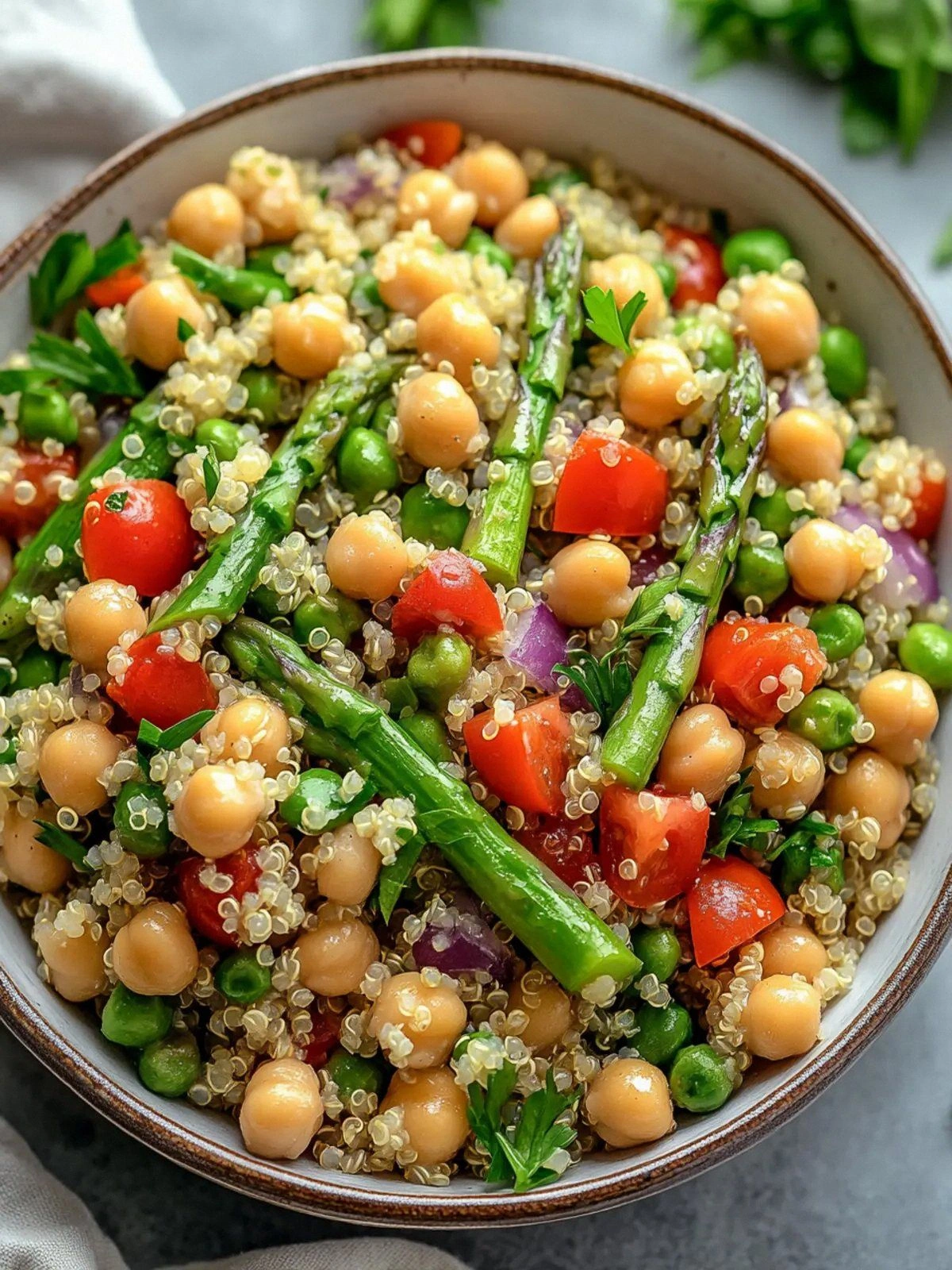
- Color Explosion: The bright green asparagus, ruby tomatoes, and golden feta create an Instagram‑ready plate. The colors are not just pretty; they signal a range of nutrients and antioxidants. The visual appeal alone can lift your mood.
- Versatility: Swap out the feta for goat cheese or a vegan alternative, add grilled chicken or shrimp for protein, or use different greens for variety. The base recipe adapts to many dietary preferences. It’s a canvas for culinary creativity.
Inside the Ingredient List
The Flavor Base
Olive oil is the foundation that brings the dressing together, providing a silky mouthfeel and a subtle fruity note. Lemon juice adds acidity that brightens every bite, cutting through the richness of feta. Dijon mustard introduces a tangy depth that balances the citrus; if you’re in a hurry, whole‑grain mustard offers a slightly sweeter profile. Garlic, salt, and black pepper are the classic seasonings that elevate the entire dish; skipping any of them would leave the salad feeling flat.
The Protein & Fiber Core
Quinoa is a complete protein, offering all nine essential amino acids, and its fluffy texture gives the salad a hearty base. Rinsing quinoa before cooking removes the natural saponin coating, preventing bitterness and ensuring a clean, nutty flavor. Chickpeas provide plant‑based protein and a creamy texture that contrasts beautifully with the crisp asparagus. If you prefer a lighter option, you can substitute lentils, but they will change the mouthfeel.
The Veggie Ensemble
Asparagus is the star; its bright green color signals freshness, and its tender stalks hold up well to dressing. Cherry tomatoes burst with juiciness, adding a sweet contrast to the savory elements. Red onion offers a sharp bite that cuts through the richness of feta, while also contributing a subtle sweetness when lightly caramelized. Fresh parsley not only adds a herby freshness but also boosts the salad’s visual appeal; if parsley is out of season, dill or basil can work as substitutes.
The Creamy Accent
Feta cheese brings a salty, tangy creaminess that balances the acidity of the lemon dressing. It also adds a subtle briny depth that enhances the overall flavor profile. If you’re vegan or lactose intolerant, a crumbled goat cheese or a vegan feta alternative will work nicely. The cheese should be crumbled finely so it disperses evenly without overwhelming the other ingredients.
Everything's prepped? Good. Let's get into the real action...
The Method — Step by Step
- Start by rinsing 1 cup of quinoa under cold water to remove its natural bitter coating. Bring 2 cups of water to a boil, then add the quinoa, reduce heat to low, cover, and simmer for 15 minutes until the grains are fluffy and the water is absorbed. Let the quinoa rest, covered, for 5 minutes before fluffing it with a fork; this step ensures a light, airy texture. While the quinoa cooks, gather the remaining ingredients so everything is within arm’s reach. The aroma of simmering water will hint at the comfort that’s about to unfold.
- Trim the ends of the asparagus, then blanch them in boiling salted water for exactly 1 minute for 1‑inch spears, or 2 minutes for thicker ones. Immediately plunge the spears into an ice bath to halt the cooking process; this preserves their bright green hue and crispness. Drain thoroughly and pat dry with paper towels to remove excess moisture; a dry surface is key to a satisfying crunch. While the asparagus cools, you’ll notice the subtle earthy aroma that will mingle with the dressing later. This quick blanching trick keeps the spears from turning mushy.
- Heat a dry skillet over medium heat and add the drained chickpeas. Toast them for 6-8 minutes, stirring frequently, until they develop a golden-brown crust and a nutty aroma. The key is to keep the heat steady; if the pan gets too hot, the chickpeas will burn before they toast. Once toasted, set them aside to cool; the crunch will be irresistible. This step turns ordinary canned chickpeas into a crunchy, flavor-packed component.
- In a small bowl, whisk together 1/4 cup olive oil, 2 tablespoons fresh lemon juice, 1 teaspoon Dijon mustard, 1 minced clove of garlic, 1 teaspoon salt, 1/2 teaspoon black pepper, and 1 teaspoon lemon zest. The mustard and lemon combine to create a bright, silky dressing that coats each ingredient. Taste the dressing; if you prefer a sweeter note, add a touch of honey or maple syrup. The dressing should be thick enough to cling to the quinoa and veggies without being overly oily. This vinaigrette is the secret that ties the salad together.
- Combine the cooked quinoa, blanched asparagus, toasted chickpeas, 1 cup cherry tomatoes, 1/4 cup finely diced red onion, 1/4 cup chopped fresh parsley, and 1/4 cup crumbled feta in a large mixing bowl. Pour the dressing over the mixture and toss gently until everything is evenly coated. The salad should look vibrant, with the green asparagus and bright tomatoes standing out against the creamy feta. If you prefer a stronger dressing flavor, add an extra tablespoon of lemon juice. This is the moment of truth where all the elements unite.
- Let the salad rest for 10 minutes at room temperature; this allows the flavors to meld and the quinoa to absorb the dressing fully. Cover the bowl loosely with plastic wrap to keep it from drying out. During this time, the asparagus will release a subtle steam that enhances its freshness. After the rest period, give the salad a final toss to redistribute the dressing. This resting period is crucial for a balanced flavor profile.
- Adjust seasoning by adding a pinch more salt or pepper if needed. Sprinkle additional fresh parsley for a burst of color and herbal brightness. Serve the salad chilled or at room temperature, depending on your preference. If you’re serving it as a side dish, a few extra lemon wedges on the side add a refreshing zing. The final presentation should look like a garden in a bowl.
That's it — you did it. But hold on, I've got a few more tricks that'll take this to another level...
Insider Tricks for Flawless Results
The Temperature Rule Nobody Follows
Quinoa cooks best at a gentle simmer; if you let it boil too vigorously, the grains can become gummy. Use a tight‑lidded pot and reduce the heat as soon as the water boils. A quick test: pop a grain in your mouth; it should feel tender but not mushy. This subtle temperature control keeps the quinoa light and airy. Skipping this step often results in a soggy salad.
Why Your Nose Knows Best
When whisking the dressing, the scent of fresh lemon and mustard is a good indicator of balance. If the aroma leans too strongly toward garlic, pause and taste; a touch of honey can restore equilibrium. The nose can detect off‑flavors before they become obvious on the tongue. This sensory checkpoint saves you from a flavor mishap. Trust your instincts, and your palate will thank you.
The 5-Minute Rest That Changes Everything
After tossing the salad, let it sit covered for 5 minutes before serving. This brief rest lets the quinoa absorb the dressing fully, while the asparagus releases a subtle steam that enhances freshness. Many people skip this step, but the difference is a noticeably more cohesive dish. It’s a quick action that yields a big payoff. Think of it as the salad’s “cool‑down” period.
The Quick Chill Trick
If you’re in a hurry, place the salad in the fridge immediately after resting. The cold temperature locks in the bright colors and keeps the asparagus crisp. The salad can be kept for up to 3 days without losing its appeal. Just remember to stir before serving to redistribute the dressing. This trick is ideal for meal prep or a last‑minute dinner.
The Extra Crunch Factor
Adding toasted chickpeas is the secret to an extra textural contrast. If you’re short on time, pre‑toast them in a pan with a splash of olive oil and a pinch of sea salt. The chickpeas should be golden brown and fragrant. This step elevates the salad from simple to spectacular. The crunch will keep you coming back for more.
The Flavor Boost with Herbs
Fresh herbs like parsley, cilantro, or basil can be swapped to change the flavor profile. Each herb brings a distinct aroma and taste; cilantro adds citrusy brightness, basil offers sweet warmth, and parsley provides a clean finish. Use them in equal parts to keep the balance. This flexibility allows you to tailor the salad to your mood. Experiment and discover your favorite combination.
Creative Twists and Variations
This recipe is a playground. Here are some of my favorite ways to switch things up:
Mediterranean Twist
Swap feta for chopped kalamata olives and add a splash of extra‑virgin olive oil. The olives bring a briny depth that complements the lemony dressing. The result is a heartier, Mediterranean‑inspired salad. This variation pairs well with grilled lamb or chicken. The olives also add a pleasant chew.
Spicy Kick
Add a pinch of red pepper flakes to the dressing for a subtle heat. The flakes should be balanced so they don’t overpower the citrus. The spicy undertone enhances the feta’s saltiness. This version is great for those who love a little bite. Serve with a cooling yogurt dip to counterbalance.
Protein Power
Add grilled chicken breast or shrimp to elevate the dish to a main course. Slice the protein thinly and scatter it over the salad for an even distribution. The protein will soak up the dressing, adding richness. This option is perfect for a quick weeknight dinner. Pair it with a side of crusty bread.
Vegan Upgrade
Replace feta with a vegan cheese alternative or a handful of chopped nuts for crunch. Use a plant‑based yogurt or tahini in the dressing for added creaminess. This keeps the dish dairy‑free while maintaining a satisfying texture. The nutty flavor pairs wonderfully with the lemon zest. This variation is ideal for vegans or those with dairy sensitivities.
Summer BBQ
Add a dash of smoked paprika and a drizzle of barbecue sauce to the dressing. The smoky flavor pairs beautifully with the fresh asparagus. This version brings a nostalgic grill vibe to a garden salad. It’s perfect for outdoor gatherings. The barbecue sauce adds a sweet, tangy finish.
Herb Garden
Swap parsley for chopped cilantro or basil to change the aromatic profile. Each herb offers a distinct flavor; basil adds sweet warmth, while cilantro brings citrusy brightness. The change can transform the dish’s character entirely. This variation works well with a citrus‑based vinaigrette. Try it when you’re craving something new.
Storing and Bringing It Back to Life
Fridge Storage
Store the salad in an airtight container for up to 3 days. Keep the dressing separate until ready to serve, as the quinoa can absorb moisture and become soggy. The asparagus will retain its crunch if the container is sealed tightly. Before eating, give the salad a quick stir to redistribute the dressing. This method ensures freshness and flavor.
Freezer Friendly
Freezing the salad is not recommended due to the delicate texture of the asparagus. If you must freeze, separate the components: freeze quinoa, chickpeas, and tomatoes, then combine after thawing. Reheating will soften the asparagus, so it’s best to use the salad within 24 hours of thawing. Keep the dressing refrigerated and add it after thawing. This approach preserves the flavors while minimizing texture loss.
Best Reheating Method
The salad is best served cold or at room temperature; reheating can compromise the crunch. If you prefer a warm version, gently warm the quinoa and chickpeas in a skillet while adding a splash of water to create steam. Add the asparagus last, just long enough to warm it without losing crispness. Add a tiny splash of water before reheating — it steams back to perfection. Let the salad cool slightly before serving to avoid a soggy texture.