Picture yourself pulling this out of the slow cooker, the whole kitchen smelling incredible, the lamb hanging from the pot like a jewel, and the sauce thick enough to cling to the shanks like a silky glaze. The first bite is a burst of savory depth, followed by a tender chew that practically melts. If you’ve ever struggled with slow‑cooked meats, you’re not alone — and I’ve got the fix. Stay with me here — this is worth it.
Let me walk you through every single step — by the end, you’ll wonder how you ever made it any other way.
What Makes This Version Stand Out
- Flavor Depth: The initial searing creates caramelized crusts that add a nutty undertone, while the wine reduction intensifies acidity for balance.
- Texture Contrast: Tender lamb paired with crisp carrots and celery provides a satisfying bite that keeps the dish from feeling one‑dimensional.
- Herbal Brightness: Adding rosemary and thyme at the end preserves their aromatic oils, giving the sauce a fresh finish.
- Time Efficiency: The slow cooker does the heavy lifting, letting you focus on the prep while the flavors meld over hours.
- Make‑Ahead Friendly: This dish is ideal for busy weeknights; you can prepare it the night before and reheat with minimal fuss.
- Audience Appeal: The rich, comforting profile is a crowd‑pleaser, making it perfect for family dinners or entertaining guests.
- Ingredient Quality: Using high‑quality lamb shanks and fresh herbs elevates the dish, turning a simple meal into a memorable experience.
- Versatile Base: The sauce can be served over mashed potatoes, polenta, or even a rustic crusty bread.
Alright, let's break down exactly what goes into this masterpiece...
Inside the Ingredient List
The Flavor Base
Lamb Shanks: These are the star of the dish, providing a rich, gamey flavor that becomes tender through slow cooking. If you use bone‑in shanks, you’ll get a deeper, more robust taste; boneless will be lighter but still delicious. Skipping them would mean you’d have to use another protein, which changes the dish entirely.
Olive Oil: Used for browning the meat, adding depth to the flavor. A high‑smoke point oil like extra‑virgin olive oil gives a subtle fruitiness; if you prefer a neutral taste, use a light olive oil or canola. Without oil, the lamb won’t develop a nice crust.
Onion: Adds sweetness and aromatic depth to the sauce. A medium onion is ideal; a yellow onion brings a mellow sweetness, while a white onion offers sharper notes. If you omit it, the sauce will lack body.
The Texture Crew
Garlic: Infuses the dish with a robust flavor that complements the lamb. Use fresh cloves for the best aroma; pre‑minced garlic loses intensity. Too much garlic can overpower the lamb, so keep the quantity moderate.
Carrots & Celery: Contribute sweetness and texture to the sauce. They also help to thicken the broth naturally as they break down. If you’re on a low‑carb diet, you can reduce the carrots by half, but the sauce will be less sweet.
The Unexpected Star
Red Wine: Adds acidity and complexity; can be substituted with additional broth for a non‑alcoholic version. A dry red wine like Cabernet Sauvignon or Merlot works best; avoid sweet or fortified wines. If you’re avoiding alcohol, use a splash of apple cider vinegar instead for a similar acidity.
The Final Flourish
Tomato Paste: Provides richness and a slight sweetness to balance the flavors. It also adds color, giving the sauce a deep, appetizing hue. If you’re avoiding tomatoes, a splash of tomato sauce can substitute, but it will be less concentrated.
Fresh Rosemary & Thyme: Essential for adding aromatic herbal notes. The combination of these herbs gives the sauce an earthy, fragrant finish. If you’re out of fresh herbs, dried ones can work, but add them earlier to allow the flavors to infuse.
Salt & Pepper: Enhances all the flavors, ensuring a well‑seasoned dish. Season in stages: after searing, after adding the liquid, and at the end for a final touch. Skipping seasoning will result in a bland sauce.
Everything's prepped? Good. Let's get into the real action...
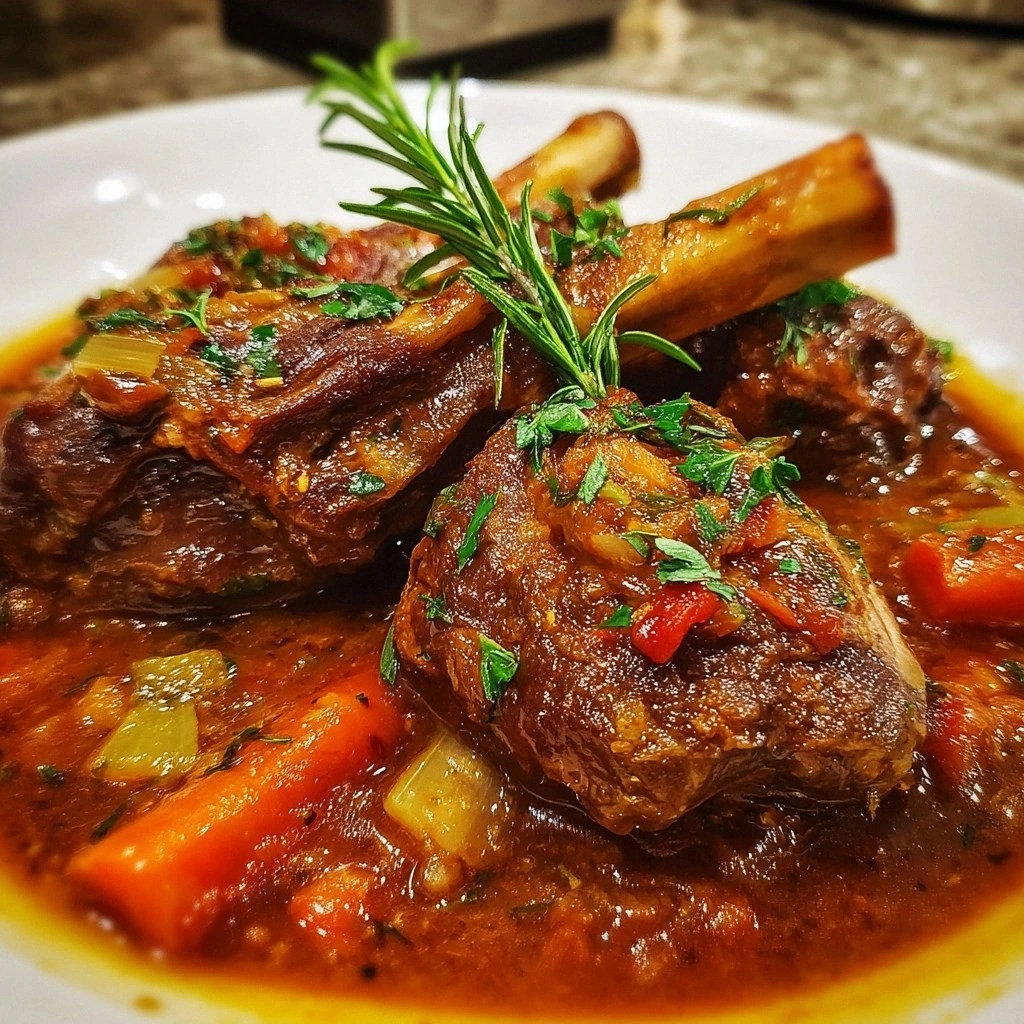
The Method — Step by Step
- Start by patting the lamb shanks dry with paper towels. This step is crucial because moisture prevents proper browning. Heat a large skillet over medium‑high heat and add 2 tablespoons of olive oil. When the oil shimmers, place the shanks in the pan, searing each side for about 3–4 minutes until a golden crust forms. This caramelized surface locks in juices and adds depth to the final sauce.
- Transfer the browned shanks to the slow cooker. In the same skillet, add 1 diced onion and 4 minced garlic cloves, sautéing until the onion turns translucent and emits a fragrant aroma. This step builds the flavor base; do not skip it. Pour the sautéed mixture into the slow cooker, allowing it to mingle with the lamb.
- Add 3 sliced carrots and 3 diced celery stalks to the pot. These vegetables not only add sweetness but also help thicken the sauce as they break down during the slow‑cooking process. Stir gently to distribute them evenly around the lamb.
- Pour in 1 cup of dry red wine, scraping the bottom of the skillet to lift any browned bits. The wine should reduce to about half its volume before adding the broth; this concentrates the acidity and balances the richness. Let the liquid simmer for 5 minutes before placing the lid on the slow cooker.
- Add 2 cups of beef broth and 2 tablespoons of tomato paste. Stir until the paste is fully incorporated, creating a glossy, thickened sauce. The tomato paste adds a subtle sweetness and color; it also helps emulsify the sauce.
- Tuck 2 sprigs of fresh rosemary and 2 sprigs of thyme into the pot. The herbs should be positioned so they can release their essential oils without being crushed. Cover and set the slow cooker to low for 8 hours or high for 4–5 hours.
- When the cooking time is nearly finished, remove the herb sprigs to avoid bitterness. Check the lamb; it should be fork‑tender and easily separating from the bone. If the sauce is too thin, remove the lid, increase the heat to medium on the stovetop, and let it reduce for 10–15 minutes.
- Taste the sauce and season with salt and pepper to taste. The final adjustment ensures the flavors are balanced. Serve immediately over mashed potatoes or a bed of polenta, spooning the glossy sauce over each shank.
That's it — you did it. But hold on, I've got a few more tricks that'll take this to another level...
Insider Tricks for Flawless Results
The Temperature Rule Nobody Follows
Slow cookers vary in heat distribution; using a thermometer to check the internal temperature of the lamb ensures it reaches 195°F for maximum tenderness. A quick check after 6 hours will let you know if you need to extend the cooking time. This trick guarantees you never end up with a tough, dry shank.
Why Your Nose Knows Best
Before you add the final herbs, take a quick sniff of the sauce. If it smells too acidic, let it reduce a bit longer. Your nose is a reliable indicator of balance; a well‑balanced sauce will have a harmonious blend of savory, sweet, and herbal notes.
The 5‑Minute Rest That Changes Everything
Once the lamb is done, let it rest covered for 5 minutes before serving. This short pause allows the juices to redistribute, ensuring every bite is moist and flavorful. A friend once skipped this step and the lamb came out slightly dry; that’s a lesson I’ll never forget.
Keep the Sauce Thick
If you prefer a thicker sauce, mix a tablespoon of cornstarch with a tablespoon of cold water and stir it into the pot during the last 15 minutes of cooking. The slurry will thicken the sauce without altering the flavor profile.
Serve with the Right Side
Pairing the lamb with a creamy mash or a hearty polenta amplifies the dish’s richness. Avoid overly light sides that might feel out of place; the sauce is robust and deserves a substantial base to soak up.
Creative Twists and Variations
This recipe is a playground. Here are some of my favorite ways to switch things up:
Spiced Moroccan Twist
Replace the rosemary with 1 teaspoon of ground cumin, 1 teaspoon of smoked paprika, and a pinch of cinnamon. Add a handful of dried apricots and a splash of orange juice to the slow cooker. The result is a sweet, spiced sauce that pairs wonderfully with couscous.
Herb‑Infused Greek Style
Swap the thyme for oregano and add a squeeze of lemon juice just before serving. Toss in a handful of Kalamata olives for briny depth. Serve over a bed of lemon‑herb rice for a Mediterranean vibe.
Rich Mushroom Umami
After searing, sauté sliced mushrooms in the same pan until golden. Add them to the slow cooker with the vegetables. The earthy mushroom flavor complements the lamb, creating a deeper umami profile.
Low‑Carb Delight
Omit the carrots and use cauliflower florets instead. The cauliflower will break down and thicken the sauce while keeping the dish low in carbs. Pair with a cauliflower mash for a complete meal.
Vegan Adaptation
Replace the lamb with large chunks of seared tofu or tempeh. Use vegetable broth instead of beef broth, and add a splash of soy sauce for umami. This version maintains the sauce’s richness while keeping it plant‑based.
Storing and Bringing It Back to Life
Fridge Storage
Cool the dish completely, then transfer to an airtight container. Store in the refrigerator for up to 4 days. The sauce will thicken slightly, but a quick stir will restore its glossy consistency.
Freezer Friendly
Place the cooled lamb shanks and sauce in a freezer‑safe container, leaving a few inches of headspace. Freeze for up to 3 months. Thaw overnight in the refrigerator before reheating.
Best Reheating Method
Reheat the lamb shanks in a saucepan over medium heat, adding a splash of beef broth or water to loosen the sauce. Bring to a gentle simmer, stirring occasionally, until heated through. A tiny splash of water before reheating steams the dish back to perfection.