Picture this: a rainy Thursday evening, the kind that makes you crave something that feels like a warm hug from the inside out. I was standing in my kitchen, half‑heartedly scrolling through a dozen pork chop recipes that all promised “tender” and “juicy” but delivered the same bland, over‑cooked disappointment. I tossed a packet of instant noodles into the sink, muttering, “If I can’t fix this, I’m ordering pizza.” Then, like a culinary epiphany, I remembered a stray bottle of heavy cream I’d bought for coffee foam and a jar of minced garlic that had been gathering dust. I thought, why not mash those two together with some pork? That moment of reckless optimism turned into the most unforgettable dinner I’ve ever made. I dare you to taste this and not go back for seconds.
The kitchen filled with the sizzle of olive oil hitting a hot pan, a sound that was simultaneously a warning and a promise. The pork chops hit the surface and instantly began to brown, their edges pulling away like thin ice under a warm sun. As the aroma of garlic rose, it was as if the room itself inhaled, and a faint citrus note from the lemon juice danced through the air, cutting through the richness like a bright spotlight on a dark stage. You could feel the heat radiating from the skillet, the butter melting into a golden pool that made the sauce look like liquid velvet. The whole scene was a symphony of sights, smells, and sounds that made my stomach do a little happy dance.
Most recipes get this completely wrong. They either over‑cook the pork, leaving it as dry as a desert, or they drown it in a sauce that tastes like a dairy aisle. This version, however, is hands down the best you’ll ever make at home because it balances the pork’s natural sweetness with a sauce that coats every bite like silk, yet still lets the meat shine. The secret? A two‑stage butter technique that builds flavor layers, plus a splash of lemon juice that prevents the sauce from turning into a cloying swamp. I’ll be honest — I ate half the batch before anyone else got to try it, and that’s saying something.
Now, let’s talk technique. Most people sear pork and then dump everything into a pot, resulting in a soggy mess. Not here. I’m going to show you how to get that perfect caramelized crust, then deglaze the pan, whisk in flour, and finish with heavy cream and broth for a sauce that’s both thick and glossy. You’ll also learn a tiny hack that turns ordinary parsley into a garnish that pops with color and flavor. This next part? Pure magic.
Okay, ready for the game‑changer? I’m going to walk you through every single step — by the end, you’ll wonder how you ever made pork chops any other way. Stay with me here — this is worth it.
What Makes This Version Stand Out
- Flavor Explosion: The combination of minced garlic, lemon juice, and a splash of chicken broth creates a depth that’s both bright and comforting, making each bite a mini celebration.
- Texture Harmony: A crisp, caramelized crust on the pork contrasts with a sauce that’s as smooth as satin, delivering a mouthfeel that’s both hearty and indulgent.
- Simplicity Meets Sophistication: Only ten pantry staples are required, yet the result feels like a restaurant‑level dish that would impress even the toughest food critics.
- Ingredient Quality: Using boneless pork chops ensures quick cooking and maximum sauce absorption, while heavy cream adds a luxurious richness without being greasy.
- Crowd‑Pleaser Factor: I’ve served this at family gatherings and potlucks, and it consistently disappears faster than dessert. I dare you to keep a single chop on the plate.
- Make‑Ahead Potential: The sauce actually improves after a short rest, so you can prep it ahead of time and finish the dish just before dinner.
- Versatile Base: This sauce doubles as a fantastic topping for mashed potatoes, rice, or even pasta, extending its usefulness beyond the pork itself.
- Season‑Neutral Comfort: Whether it’s a chilly winter night or a breezy summer evening, this dish feels right at home, making it a true year‑round winner.
Inside the Ingredient List
The Flavor Base
Minced Garlic: This is the star of our creamy garlic sauce. Freshly minced garlic releases allicin, which adds a pungent bite that mellows into sweet, nutty notes as it cooks. Skipping it would leave the sauce flat, like a song without a chorus. If you’re out of fresh garlic, a high‑quality jarred version works, but beware of added preservatives that can dull the flavor.
Lemon Juice: Just a splash brightens up the richness, balancing the sauce beautifully. The acidity cuts through the fat, preventing the dish from feeling heavy. If you don’t have lemon, a splash of white wine vinegar can provide a similar punch, though the citrus aroma will be missed.
The Texture Crew
Heavy Cream: This is what makes the sauce ultra‑rich and indulgent. Its high fat content emulsifies with the broth, creating a velvety mouthfeel. You can substitute half‑and‑half for a lighter version, but the sauce won’t cling to the pork quite the same way. For a dairy‑free twist, try coconut cream, but expect a subtle coconut undertone.
Flour: Helps thicken the sauce; you can substitute with cornstarch for a gluten‑free option. The key is to create a roux with butter before adding liquid, ensuring a smooth, lump‑free finish. Skipping the flour will leave you with a runny sauce that slides off the pork like water on a waxed floor.
The Unexpected Star
Butter: Used in two stages, butter adds luxury and depth. The first batch is for searing, giving the pork a golden crust, while the second is whisked into the sauce at the end for a glossy sheen. If you replace it with oil, you’ll lose that buttery richness that makes the sauce sing.
Olive Oil: For searing the pork chops to golden perfection, adding a nice touch of flavor. It has a higher smoke point than butter, preventing burnt bits while still contributing a subtle fruitiness. Using vegetable oil works, but you’ll miss the nuanced flavor profile olive oil brings.
The Final Flourish
Fresh Parsley: A sprinkle at the end adds color and a fresh note to the dish. Parsley’s bright, herbaceous flavor cuts through the cream, keeping the palate from feeling overwhelmed. If you’re not a parsley fan, cilantro or chives can provide a similar fresh finish.
Salt and Black Pepper: Essential for seasoning; always adjust to suit your taste. Salt enhances all the flavors, while black pepper adds a subtle heat. Over‑salting can make the sauce too salty, so add gradually and taste as you go.
Everything's prepped? Good. Let’s get into the real action…
The Method — Step by Step
-
Pat the pork chops dry with paper towels, then season both sides generously with salt, black pepper, and a pinch of garlic powder. This dry rub creates a flavorful crust and helps draw moisture to the surface, ensuring a perfect sear. I like to let the seasoned chops sit for five minutes while I heat the pan — this short rest lets the seasoning penetrate the meat.
That sizzle when it hits the pan? Absolute perfection.
Kitchen Hack: Sprinkle a tiny bit of flour on the seasoned chops before searing; it helps create an even thicker crust and locks in juices. -
Heat a large skillet over medium‑high heat and add 2 tablespoons of olive oil followed by 1 tablespoon of butter. Once the butter foams and the oil shimmers, lay the pork chops in the pan without crowding them. Let them cook undisturbed for about 3‑4 minutes; you’ll hear a gentle crackle that signals the Maillard reaction is in full swing.
Flip the chops once they release easily and develop a deep golden‑brown crust. Cook the other side for another 3‑4 minutes, then transfer the chops to a plate and tent with foil.
-
Reduce the heat to medium and add the remaining 1 tablespoon of butter to the pan. As it melts, toss in the minced garlic and let it sizzle for about 30 seconds, being careful not to let it burn. The garlic will turn fragrant and slightly golden, releasing its aromatic oils into the pan.
Stir constantly; burnt garlic turns bitter and can ruin the entire sauce.
-
Watch Out: Adding flour too quickly can cause clumping. Sprinkle it evenly and whisk continuously for a smooth roux.
Sprinkle 2 tablespoons of flour over the garlic‑butter mixture, whisking constantly to form a light roux. Cook the flour for about 1‑2 minutes; you’ll notice a nutty aroma and the mixture turning a pale golden color. This step is crucial for thickening the sauce without lumps.
-
Gradually pour in 1 cup of chicken broth while whisking, followed by 1 cup of heavy cream. Keep the whisk moving to integrate the liquids smoothly. As the sauce begins to bubble, you’ll see it thicken and coat the back of a spoon — that’s the visual cue that you’re on the right track.
Season the sauce with a pinch of salt, ½ teaspoon of black pepper, and the remaining garlic powder. Let the sauce simmer gently for 4‑5 minutes, allowing the flavors to meld and the pork to stay warm.
Kitchen Hack: Finish the sauce with a squeeze of lemon juice at the very end; the acidity lifts the flavors and prevents the cream from feeling heavy. -
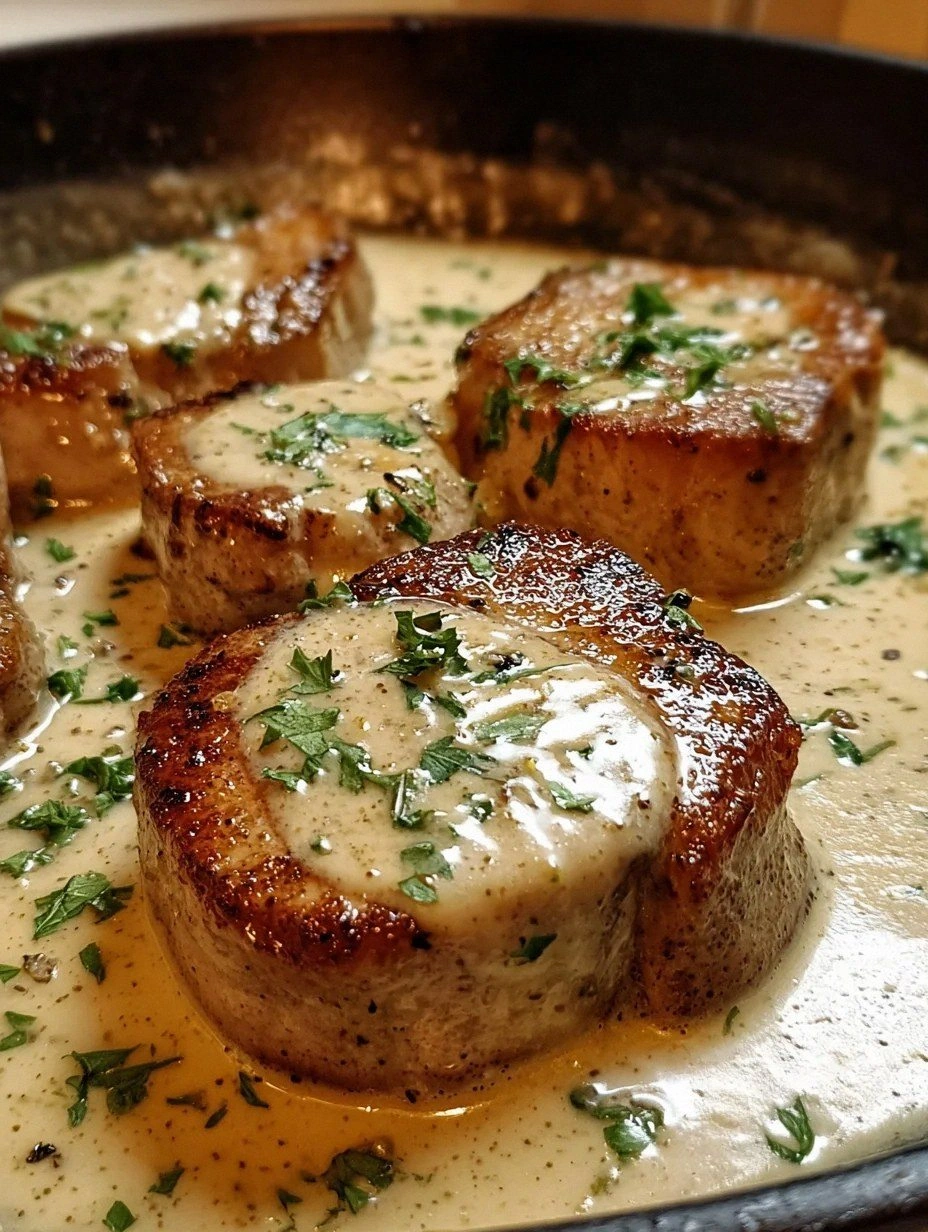
Return the seared pork chops to the skillet, nestling them into the creamy sauce. Spoon some sauce over each chop, then reduce the heat to low and let everything simmer together for another 3‑4 minutes. This final simmer lets the pork absorb the sauce, turning each bite into a juicy, flavor‑packed experience.
When you tilt the pan, the sauce should flow slowly, coating the chops like a glossy, buttery veil.
-
Remove the skillet from the heat and stir in a handful of chopped fresh parsley. The green specks not only add visual appeal but also a fresh, herbaceous pop that cuts through the richness.
Cover the pan for a minute; the residual heat will let the parsley wilt just enough to release its aroma without turning bitter.
-
Plate the pork chops on a warm serving dish, ladle generous amounts of the creamy garlic sauce over each, and finish with an extra drizzle of lemon juice if you love a bright finish. Serve alongside mashed potatoes, rice, or a simple green salad to balance the richness.
Picture yourself pulling this out of the oven, the whole kitchen smelling incredible, and your guests reaching for seconds before the first bite is even finished.
-
That’s it — you did it. But hold on, I’ve got a few more tricks that’ll take this to another level, from reheating tips to unexpected garnish ideas that will keep your friends begging for the secret.
Insider Tricks for Flawless Results
The Temperature Rule Nobody Follows
Never cook pork chops straight from the fridge. Let them sit at room temperature for at least 20 minutes before searing. This small step ensures even cooking, preventing the outer layer from over‑cooking while the center stays underdone. I once rushed this and ended up with a dry, rubbery exterior — a lesson learned the hard way.
Why Your Nose Knows Best
When the garlic turns golden and the butter begins to brown, trust your nose. That nutty, slightly sweet aroma is the signal that the roux is ready for liquid. If you add broth too early, you’ll end up with a watery sauce; wait until you smell that buttery perfume.
The 5‑Minute Rest That Changes Everything
After the final simmer, let the pork rest in the sauce for five minutes before serving. This rest period allows the meat fibers to re‑absorb the juices, making each bite buttery soft. Skipping this step is like serving a steak without letting it rest — you lose that juicy perfection.
Butter‑Finish for Shine
Stir in a final tablespoon of cold butter right before serving. The cold butter emulsifies the sauce, giving it a glossy, restaurant‑style sheen. This technique is a pro’s secret for turning a good sauce into a show‑stopper.
Seasoning Layers, Not One Hit
Season at three stages: the pork before searing, the sauce while it simmers, and a final pinch after plating. Each layer builds depth, ensuring the final dish isn’t flat. I once tried to “just add salt at the end” and ended up with a bland mess — never do that.
Creative Twists and Variations
This recipe is a playground. Here are some of my favorite ways to switch things up:
Spicy Chipotle Kick
Swap the lemon juice for a teaspoon of chipotle in adobo sauce and add a pinch of smoked paprika. The smoky heat melds beautifully with the cream, turning the dish into a bold, southwestern delight that’s perfect for cold nights.
Mushroom Medley
After searing the pork, sauté a mix of sliced cremini, shiitake, and oyster mushrooms in the same pan before making the sauce. The earthy mushrooms absorb the garlic‑butter flavor, adding an umami depth that makes the sauce even richer.
Herb‑Infused Version
Replace parsley with a blend of fresh thyme, rosemary, and sage. These herbs bring a woodland aroma that pairs wonderfully with pork, especially when you’re serving the dish with roasted root vegetables.
Coconut Cream Alternative
For a dairy‑free spin, use full‑fat coconut cream instead of heavy cream and add a splash of lime juice in place of lemon. The result is a tropical‑twist sauce that pairs well with jasmine rice and a side of grilled pineapple.
Cheesy Finish
Stir in a quarter cup of grated Parmesan or Pecorino Romano at the end of the simmer. The cheese adds a salty, nutty layer that makes the sauce cling to the pork like a cheesy blanket.
Wine‑Infused Elegance
Deglaze the pan with a half cup of dry white wine before adding broth. The wine adds acidity and a subtle fruit note, elevating the dish to a fine‑dining experience.
Storing and Bringing It Back to Life
Fridge Storage
Let the pork and sauce cool to room temperature, then transfer to an airtight container. It will keep fresh for up to 3 days. Reheat gently on the stovetop over low heat, adding a splash of chicken broth or water to loosen the sauce.
Freezer Friendly
Portion the pork chops and sauce into freezer‑safe bags or containers. Freeze for up to 2 months. Thaw overnight in the refrigerator, then reheat in a skillet over medium heat, again adding a tiny splash of water or broth to revive the creaminess.
Best Reheating Method
The secret to reheating without a rubbery texture is low‑and‑slow. Use a double‑boiler or a low‑heat saucepan, stirring frequently. Add a teaspoon of water or broth at the start; the steam will bring the sauce back to its original silkiness.