Picture this: the kitchen clock reads 8:47 p.m., the fridge is a dim, humming gray, and you’ve just opened a package of salmon fillets that look as bland as a beige wall. You’re staring at them, thinking, “What do I do with this?” Suddenly, a friend’s voice crackles over the phone, “I’m craving something that’s crispy, creamy, and totally Instagram‑worthy.” The moment that hits you is the same moment a recipe idea sparks like a firecracker—because you’re about to discover the ultimate Crispy Salmon Bowl with Creamy.
The first thing that catches your eye is the glossy sheen of the salmon as it sizzles in a hot pan, the sound a crisp, satisfying crackle that could rival a fresh batch of popcorn. The aroma is a heady mix of toasted sesame, sweet honey, and a whisper of citrus that makes your nose do a happy dance. The texture of the skin turns a golden, flaky perfection that shatters like thin ice, while the flesh stays moist and tender, practically melting in your mouth. The creamy sauce swirls over the rice like velvet, coating each grain with a subtle tang that balances the richness of the fish. The final touch is a bright, crunchy cucumber and a buttery avocado that add a refreshing contrast, creating a symphony of flavors and textures that dance on your palate.
Why does this version stand out from every other salmon bowl you’ve tried? First, it’s the harmony of crisp and silky—no one else manages to pair the crunch of the skin with a silky, yogurt‑based sauce that feels like a light cloud. Second, it’s the balance of sweet, salty, and acidic notes that lift the dish to a new level of complexity. Third, it’s the ease of preparation: the recipe is straightforward yet delivers a restaurant‑style finish that will make your guests ask for the recipe. Fourth, it’s the versatility—swap in quinoa, swap in tofu, swap in a spicy mayo, and the base remains delicious. And finally, it’s the wow factor: the bright colors, the textural contrast, and the aroma that fills the kitchen—this dish is a showstopper.
And there’s a little secret I’ll let you in on: the sauce uses a simple mixture of Greek yogurt, mayo, lime juice, and a dash of sriracha that coats the bowl like a silky blanket, giving the dish that creamy, slightly spicy kick that you’ll keep coming back for. I dare you to taste this and not go back for seconds. Picture yourself pulling this out of the pan, the whole kitchen smelling incredible, and every bite delivering a burst of flavor that feels both familiar and utterly new. Let me walk you through every single step — by the end, you’ll wonder how you ever made it any other way.
What Makes This Version Stand Out
- Taste: The marriage of sweet honey, savory soy, and zesty lime creates a flavor profile that’s both comforting and adventurous, making each bite a revelation.
- Texture: The salmon skin crisps to a flaky perfection while the flesh stays buttery, and the creamy sauce gives a silky contrast that feels like a light cloud.
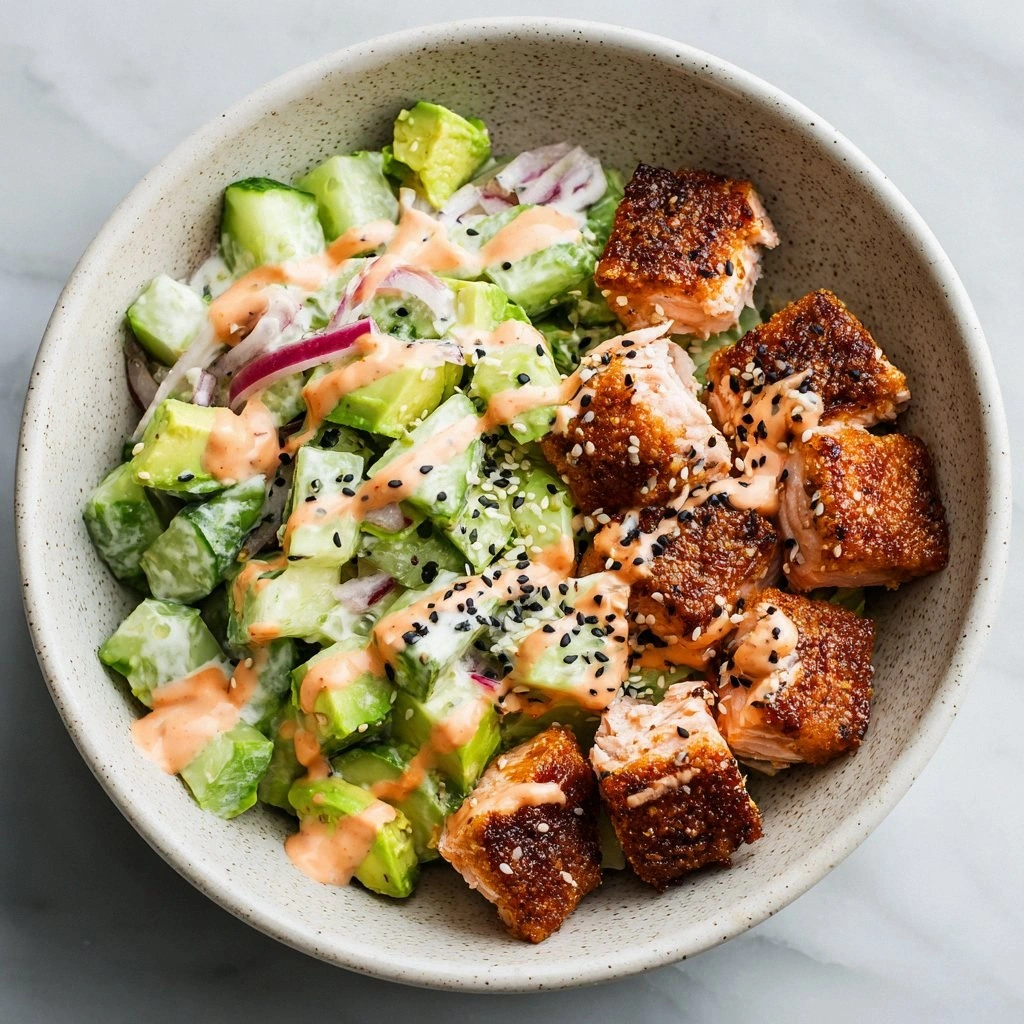
- Visual Appeal: Bright avocado, crisp cucumber, and a sprinkle of sesame seeds make the bowl pop like a work of art, turning a simple dinner into a feast for the eyes.
- Ease of Prep: With only a handful of ingredients and a straightforward method, even novice cooks can master this dish without feeling overwhelmed.
- Ingredient Quality: Fresh, high‑grade salmon and organic produce elevate the dish, ensuring every bite is packed with flavor.
- Make‑Ahead Potential: The rice and sauce can be prepared in advance, letting the salmon finish cooking just before serving for maximum freshness.
- Portability: The bowl can be enjoyed warm or at room temperature, making it ideal for take‑out or lunch boxes.
- Health Conscious: Packed with omega‑3 fatty acids, fiber, and protein, this dish satisfies both your taste buds and nutritional goals.
Alright, let's break down exactly what goes into this masterpiece...
Inside the Ingredient List
The Flavor Base
The foundation of this bowl starts with the sauce—a blend of Greek yogurt, mayo, lime juice, and a whisper of sriracha. The yogurt adds tang and a creamy texture, while the mayo brings richness and smoothness. Lime juice brightens the entire dish, cutting through the salmon’s richness and adding a citrusy lift that feels like a fresh breeze on a summer day. A splash of sriracha gives it a subtle heat that lingers, making the dish exciting without overwhelming the palate. If you’re watching calories, you can swap the mayo for a lighter Greek yogurt, or reduce the sriracha to a few drops for a milder kick.
The Texture Crew
The salmon fillets are the star of the show, but the texture crew—cucumber, avocado, and scallions—adds layers that keep each bite interesting. Fresh cucumber diced into small cubes provides a crisp bite that contrasts the buttery salmon. Avocado, sliced into thick wedges, melts into the sauce, adding creaminess and a buttery flavor that complements the fish. Scallions, finely sliced, offer a sharp, oniony bite that adds freshness and a pop of color. These ingredients are essential; if you skip them, the bowl loses its textural balance and visual appeal.
The Unexpected Star
The unexpected star is the sesame seed drizzle, which brings a nutty aroma and a subtle crunch that elevates the dish to a new level of sophistication. Toasted sesame seeds add depth and a hint of earthiness that pairs beautifully with the soy glaze. If you’re allergic or just don’t love sesame, try toasted pumpkin seeds for a similar crunch and flavor profile. Remember, the key is to toast them lightly over medium heat until they’re golden and fragrant—this step is essential for unlocking their full potential.
The Final Flourish
The final flourish involves the rice, which serves as the base that absorbs the sauce and carries the flavors. Jasmine rice is preferred for its fragrant aroma and fluffy texture, but you can also use sushi rice or even quinoa for a gluten‑free twist. The rice should be cooked to a tender, slightly sticky consistency, allowing it to cling to the sauce without becoming mushy. A pinch of salt during cooking ensures the grains are perfectly seasoned, while a splash of sesame oil after cooking adds a subtle nutty flavor that ties everything together. If you’re in a hurry, pre‑cooked rice works fine, just fluff it with a fork before assembling.
Everything's prepped? Good. Let's get into the real action...
The Method — Step by Step
- Begin by patting the salmon fillets dry with paper towels. This simple step removes surface moisture and ensures the skin crisps to a flaky, golden perfection. Season both sides with a pinch of salt and pepper. Set the fillets aside while you prep the sauce.
- In a small bowl, whisk together 1 cup Greek yogurt, 1 tablespoon mayo, juice of one lime, and 1 teaspoon sriracha. Add a splash of soy sauce for depth. Taste and adjust the seasoning—more lime for brightness, more sriracha for heat. Set the sauce aside; it will coat the bowl like a silky blanket.
- Heat a non‑stick skillet over medium‑high heat and add 1 teaspoon sesame oil. Once the oil shimmers, place the salmon skin‑side down in the pan. Let it cook undisturbed for 4–5 minutes until the skin is crisp and releases easily from the pan. Flip and cook the other side for 2–3 minutes until the salmon is opaque. The sauce should smell toasty and the edges will start pulling away—this is the moment of truth.
- While the salmon cooks, toast 1 tablespoon sesame seeds in a dry pan over medium heat until golden and fragrant—about 2 minutes. This will elevate the flavor profile and add a subtle crunch to the final bowl. If you’re vegan, use pumpkin seeds instead for a similar nutty note.
- Cook the jasmine rice according to package instructions—about 18 minutes. Once done, fluff with a fork and drizzle with 1 teaspoon sesame oil. Add a pinch of salt to taste. This will give the grains a subtle nutty flavor that pairs with the soy glaze.
- Slice the avocado into wedges and dice cucumber into bite‑size cubes. Toss them together with thinly sliced scallions. This fresh salad component adds crunch, creaminess, and a bright, citrusy note that balances the richness of the salmon.
- To assemble, place a bed of rice in each bowl, top with a salmon fillet, and arrange the cucumber‑avocado salad around it. Drizzle the creamy sauce over the salmon, letting it seep into the rice. Sprinkle toasted sesame seeds and a few scallion rings for garnish. Serve immediately, and enjoy the contrast of textures and the burst of flavors that will make your taste buds sing.
That's it — you did it. But hold on, I've got a few more tricks that'll take this to another level...
Insider Tricks for Flawless Results
The Temperature Rule Nobody Follows
Many cooks think the key to perfect salmon is a high‑heat sear, but the secret lies in controlling the internal temperature. Use a meat thermometer; aim for 125°F for medium‑rare. Over‑cooking will cause the flesh to dry out and lose its buttery texture. When the salmon reaches the target temperature, remove it from the pan immediately—residual heat will finish the cooking process. This technique guarantees a tender, juicy result every time.
Why Your Nose Knows Best
Your nose is a reliable indicator of doneness. When the salmon is ready, the aroma will shift from raw fish to a slightly sweet, toasted scent. The scent of sesame oil will also become more pronounced, signaling the pan is at the perfect temperature. Trust your senses; they’re often more accurate than a timer.
The 5‑Minute Rest That Changes Everything
After cooking, let the salmon rest on a cutting board for five minutes. This allows the juices to redistribute, ensuring each bite is moist. The rest period also lets the residual heat finish the cooking process, preventing over‑cooking. A quick rest is a small step that dramatically improves the final product.
The Right Pan for the Job
A heavy‑bottomed non‑stick skillet retains heat evenly, ensuring a crisp skin without burning. If you’re using a cast‑iron skillet, pre‑heat it for a few minutes before adding oil. A well‑heated pan guarantees the salmon will sear instantly, locking in juices.
The Sauce Consistency Trick
If the sauce is too thick, thin it with a splash of water or extra lime juice until it coats the rice like a light drizzle. If it’s too runny, whisk in a bit more Greek yogurt to thicken. The right consistency ensures every grain of rice is coated without drowning the dish.
The Final Garnish Touch
A final sprinkle of crushed red pepper or a drizzle of sesame oil adds a subtle shine and an extra layer of flavor. A few fresh mint leaves can also provide a refreshing contrast. These small touches elevate the dish from good to unforgettable.
Creative Twists and Variations
This recipe is a playground. Here are some of my favorite ways to switch things up:
Spicy Korean Fusion
Swap the soy glaze for gochujang and add a handful of kimchi to the bowl. The fermented crunch of kimchi pairs beautifully with the spicy sauce, creating a bold, umami‑rich experience that will have your guests asking for a second bowl.
Mediterranean Twist
Replace the sesame oil with extra‑virgin olive oil, and add chopped sun‑dried tomatoes and kalamata olives. The briny olives and sweet tomatoes introduce a Mediterranean vibe while the creamy sauce still provides that velvety finish.
Vegan Version
Use tempeh or marinated tofu in place of salmon. Marinate the protein in soy sauce, maple syrup, and garlic for 30 minutes before searing. The tofu will absorb the flavors and create a satisfying, protein‑rich bowl.
Quinoa Power Bowl
Swap jasmine rice for quinoa for a protein‑rich, gluten‑free base. The nutty flavor of quinoa complements the soy glaze, and the texture adds a pleasant bite that pairs well with the creamy sauce.
Breakfast Upgrade
Serve the bowl with a side of scrambled eggs and toasted sourdough for a hearty breakfast. The eggs add protein, and the toast provides a comforting crunch that turns the dish into a breakfast feast.
Storing and Bringing It Back to Life
Fridge Storage
Store the cooked salmon and rice separately in airtight containers. The sauce can be kept in a small jar. When ready to serve, reheat the salmon in a skillet or microwave for 30 seconds, and warm the rice in the microwave with a splash of water. This method preserves the crispness of the salmon skin.
Freezer Friendly
Freezing the salmon and rice together is not recommended due to the difference in moisture content. Instead, freeze the sauce and the salad components separately. When ready, thaw the sauce in the fridge overnight, and reheat the rice and salmon as described above.
Best Reheating Method
Reheat the salmon in a hot pan for 1–2 minutes on each side to restore crispness. Warm the rice in the microwave with a splash of water or in a steamer. Add a tiny splash of water before reheating to create steam, which keeps the rice moist and fluffy.